
Paperis Articles
One in Five on Bepirovirsen Reached a Hepatitis B 'Functional Cure' — A Close Reading of Two Phase 3 Trials
Adults with chronic hepatitis B who were taking oral antivirals received the investigational injection bepirovirsen for 24 weeks, and only those who met prespecified criteria stopped their oral drug under the trial protocol and medical supervision. At week 72, 20% and 19% of the bepirovirsen groups reached functional cure, versus none on placebo; grade 3 or higher adverse events during dosing were 16% versus 3%. Four in five did not reach functional cure, and durability beyond week 72 and any effect on liver cancer were not measured by this trial.
Your field's papers, as audio
Pick your fields and journals — Paperis summarizes the key papers and turns them into audio. Listen on your commute.
Start Paperis free →One in Five on Bepirovirsen Reached a Hepatitis B 'Functional Cure' — A Close Reading of Two Phase 3 Trials
Why This Paper
About 240 million people worldwide live with chronic hepatitis B, and more than 1 million people die from the disease each year (PMID 42206582). People living with this condition often experience a lower quality of life, as well as stigma and discrimination (PMID 42206582). A significant number of those receiving treatment keep the virus suppressed by taking a once-daily antiviral pill. When the medication works well, the virus is barely detectable in the blood. Yet even after taking it for several years, the marker showing that the virus remains in the body rarely disappears, which is why people take the medication for a long time, often for life (PMID 27447092).
In June 2026, the New England Journal of Medicine published the results of two phase 3 trials that challenge this picture. People who had been continuously taking their oral medication received the investigational injection bepirovirsen for 24 weeks, and only those who met predefined testing criteria stopped their oral medication under medical supervision according to the trial protocol (PMID 42206582). At week 72, about 1 in 5 people who received bepirovirsen maintained a state where the virus in their blood was too low to count and the surface marker of the virus shell remained undetectable, even after all treatment had ended. Two identically designed trials yielded 20% and 19%, while zero people in the placebo injection group reached this state (PMID 42206582).
The pharmaceutical company GSK funded these trials and handled their design, oversight, and data analysis, while the draft manuscript was written by a medical writer paid by GSK under the authors' direction (PMID 42206582). The authors stated that they vouch for the completeness and accuracy of the data (PMID 42206582).
The same numbers point in two directions. Something that had hardly ever happened before occurred in 1 out of 5 people, and 4 out of 5 people who received bepirovirsen did not reach that state at week 72. You have to hold both of these truths together to read this paper properly. This article covers trials conducted in multiple countries, and looks briefly at the situation in South Korea in the penultimate section.
Where Oral Medications Cannot Reach
Once the hepatitis B virus enters a liver cell, it places its genetic material inside the cell's nucleus. cccDNA is the genetic material that the hepatitis B virus leaves behind in a ring shape inside the liver cell's nucleus, serving as the master plate from which all viral RNA is printed. New viruses ultimately begin from this master plate (PMID 26048673).
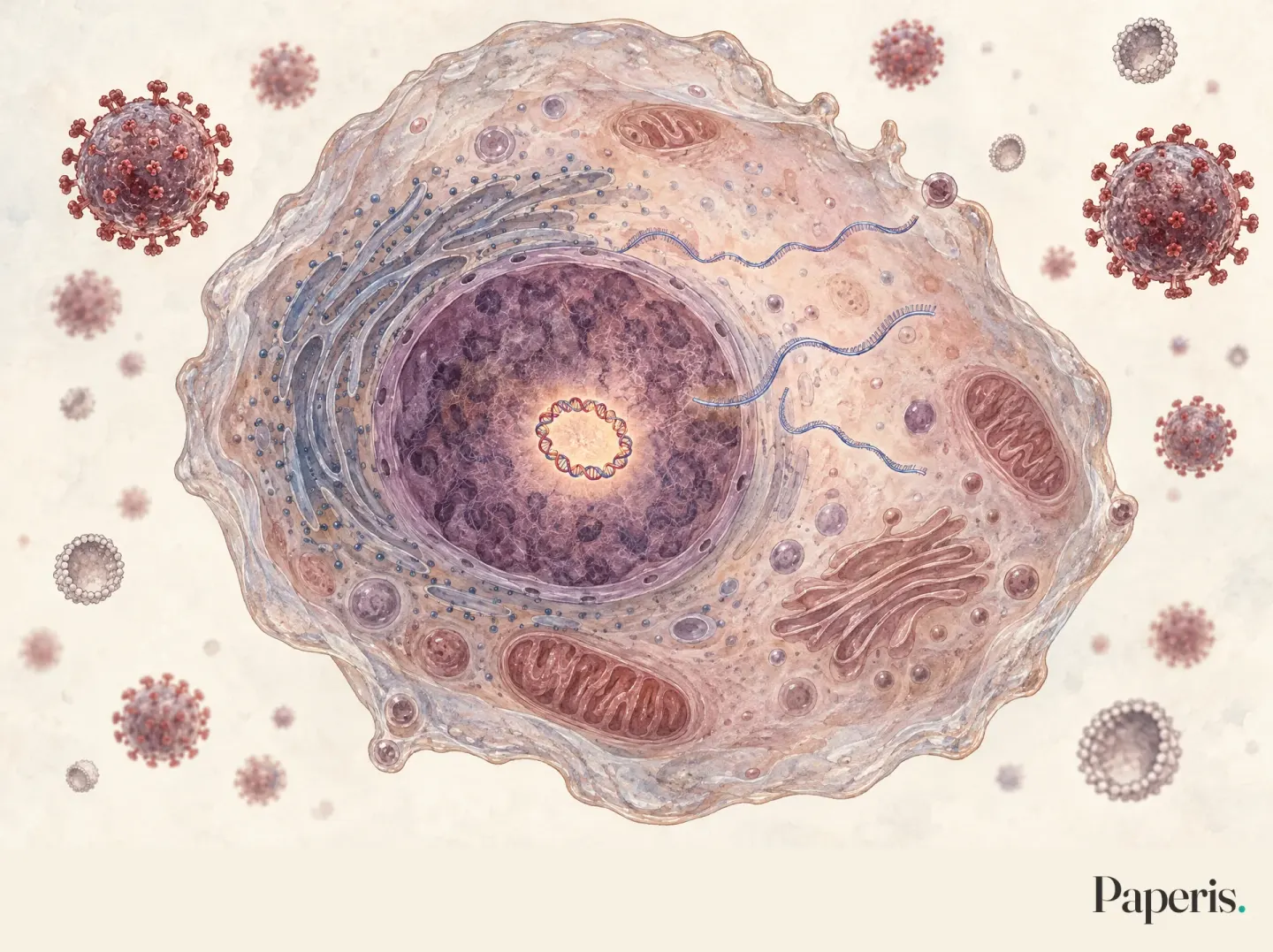
Figure: The viral genetic material that stays in the liver-cell nucleus as a ring (cccDNA) — it remains, quieted, even after a functional cure
The oral medications used today block the steps that occur after the virus emerges from the master plate. Nucleos(t)ide analogues are oral antiviral drugs that mimic the materials the virus uses when copying its genetic material, stopping replication midway. These drugs directly suppress viral DNA, but they cannot act on cccDNA (PMID 39662778). Because the master plate remains, the virus easily rebounds when treatment is stopped (PMID 27302653).
One of the things printed from the master plate is the outer shell protein of the virus. Surface antigen is the protein that forms the outer shell of the hepatitis B virus, and when it is detected in a blood test, it is a marker that the infection is ongoing. Even when viral replication is deeply suppressed, that alone does not cause the surface antigen to decrease or disappear (PMID 36631717). Only about 1% of people lose the surface antigen with current oral medications (PMID 39005698). Including injectable peginterferon, the disappearance of the surface antigen with currently approved treatments is rare (PMID 42206582). People who lose the surface antigen tend to have a better prognosis than those who do not (PMID 36243037).
Therefore, the target aimed at by new treatments is the surface antigen. Functional cure is a state where, even after completing a prescribed course of treatment for 24 weeks or longer, the surface antigen disappears from the blood and the viral DNA also remains below the lowest level detectable by tests. The 2019 EASL-AASLD consensus conference on trial endpoints agreed that Phase 3 trial primary results should adopt functional cure (PMID 31730789). In these trials, the sequence is as follows. Participants who meet pre-specified criteria first stop their oral medication under medical supervision according to the trial protocol, and only after being observed for the subsequent 24 weeks is functional cure determined (PMID 42206582). The authors cite as the reason for adopting functional cure as a treatment goal that, if that state is maintained, oral medication is no longer needed, thereby eliminating the risks of viral resurgence due to drug resistance or missed doses, as well as the costs and side effects of long-term use (PMID 42206582).
There are boundaries to this term. Even in people who have achieved functional cure, cccDNA remains dormant inside the nuclei of liver cells (PMID 27447092). Erasing cccDNA from all infected cells and even clearing the viral DNA integrated into the human genome is referred to separately as "complete cure" (PMID 36243037). Current treatments cannot target these two forms of viral DNA (PMID 37778776). What "functional cure" refers to is simply that a state where the virus is undetectable in the blood continues even without treatment, while the master plate remains inside the body.
Question: Can People Hold Steady Even After Stopping Pills 24 Weeks After Injections?
Bepirovirsen went through a phase 2b trial before this one. Among people who received 300 mg once a week for 24 weeks, 9 to 10% maintained undetectable surface antigen and viral DNA below the lower limit of quantification for 24 weeks after bepirovirsen treatment ended. During that period, participants who had been taking oral medication continued taking it, and the 457 participants were uneven in their surface antigen levels (PMID 36346079). Those researchers wrote that larger and longer trials are needed to see efficacy and safety (PMID 36346079). In the extension follow-up of the phase 2 trial, some people whose surface antigen was 3,000 IU/mL or less maintained functional cure even after stopping oral medication (PMID 42206582).
This drug targets RNA copied from the master template. An antisense oligonucleotide is a short strand of nucleic acid designed to pair with a target RNA, sticking to that RNA to prevent protein from being made. Bepirovirsen is an antisense oligonucleotide that targets all hepatitis B virus RNA, reducing both viral DNA and surface antigen together (PMID 42206582). The authors write that there is evidence this drug also stimulates the immune response (PMID 42206582). A study using a combination of participant blood samples, cell experiments, and mouse experiments reports that part of that stimulation may go through a receptor of the innate immune system (TLR8), while writing that it is still not clear what this immune effect means for treatment outcomes (PMID 42264034).
The B-Well trial asked one question. When people who were continuing to take oral medication received bepirovirsen for 24 weeks, met the criteria, and then went 24 weeks after even stopping their oral medication, were more people reaching functional cure than those who received a placebo (PMID 42206582)?
Methods: Two Identically Designed Trials
B-Well 1 and B-Well 2 were placebo-controlled Phase 3 trials that enrolled participants from 29 countries across Europe, the Asia-Pacific region, and the Americas between December 2022 and May 2024, and the designs of the two trials are identical (PMID 42206582). Both trials are double-blind. A double-blind design is one in which neither the participants nor the research team knows who receives the real drug. Participants were randomly divided in a 2:1 ratio like a draw, so that for every two people receiving bepirovirsen, one received a fake injection that looked and was used the same way but had no active medicinal ingredient, in other words, a placebo. 1,838 people were assigned, and 1,834 people who received an injection even once entered the analysis (PMID 42206582).
The eligibility criteria were narrowly defined. They were adults who had steadily taken oral medication for six months or more, whose viral DNA in the blood was less than 90 IU per mL, and whose surface antigen was between 100 and 3,000 IU per mL (PMID 42206582). Liver test values were also a condition. ALT is an enzyme abundant inside liver cells; when liver cells are injured, it leaks into the blood and causes test levels to rise. Participants' ALT had to not exceed twice the upper limit of normal (PMID 42206582). People with or suspected of having cirrhosis, those concurrently suffering from hepatitis C, HIV, or hepatitis D, and those with fewer than 140,000 platelets per mm³ were excluded (PMID 42206582). The average age of participants was 49 to 50 years, around 70% were male, roughly two-thirds were Asian, and 63% had a surface antigen of 1,000 IU or less (PMID 42206582).
The schedule has four blocks. From weeks 1 to 24, bepirovirsen 300 mg or a placebo was injected subcutaneously every week, with an extra injection given on day 4 and day 11 during the first two weeks (PMID 42206582). Everyone took oral medication alongside throughout this period as well, and from weeks 24 to 48, they took only oral medication (PMID 42206582). According to the trial protocol, the only people eligible to stop oral medication at week 48 were those whose viral DNA from week 24 to week 46 was less than 20 IU per mL, whose surface antigen was consistently undetectable, whose ALT at week 46 was no higher than twice the upper limit of normal, and who were negative for another viral marker called the e antigen (PMID 42206582). Those who fell short of the criteria continued taking oral medication, and in the placebo group, no one met the criteria to stop the drug (PMID 42206582). The primary outcome was functional cure at week 72, which is 24 weeks after completely stopping hepatitis B treatment for those who stopped the drug (PMID 42206582). People whose outcomes could not be known were counted as having no effect (PMID 42206582). In the determination, among results where both preceding and following tests were negative, a result caught as positive just once was treated as a temporary fluctuation and allowed (PMID 42206582). An independent data and safety monitoring committee reviewed unblinded data, an independent adjudication committee investigated the causes of severe liver-related adverse events, and a hepatitis B patient advisory panel provided input on the design (PMID 42206582).
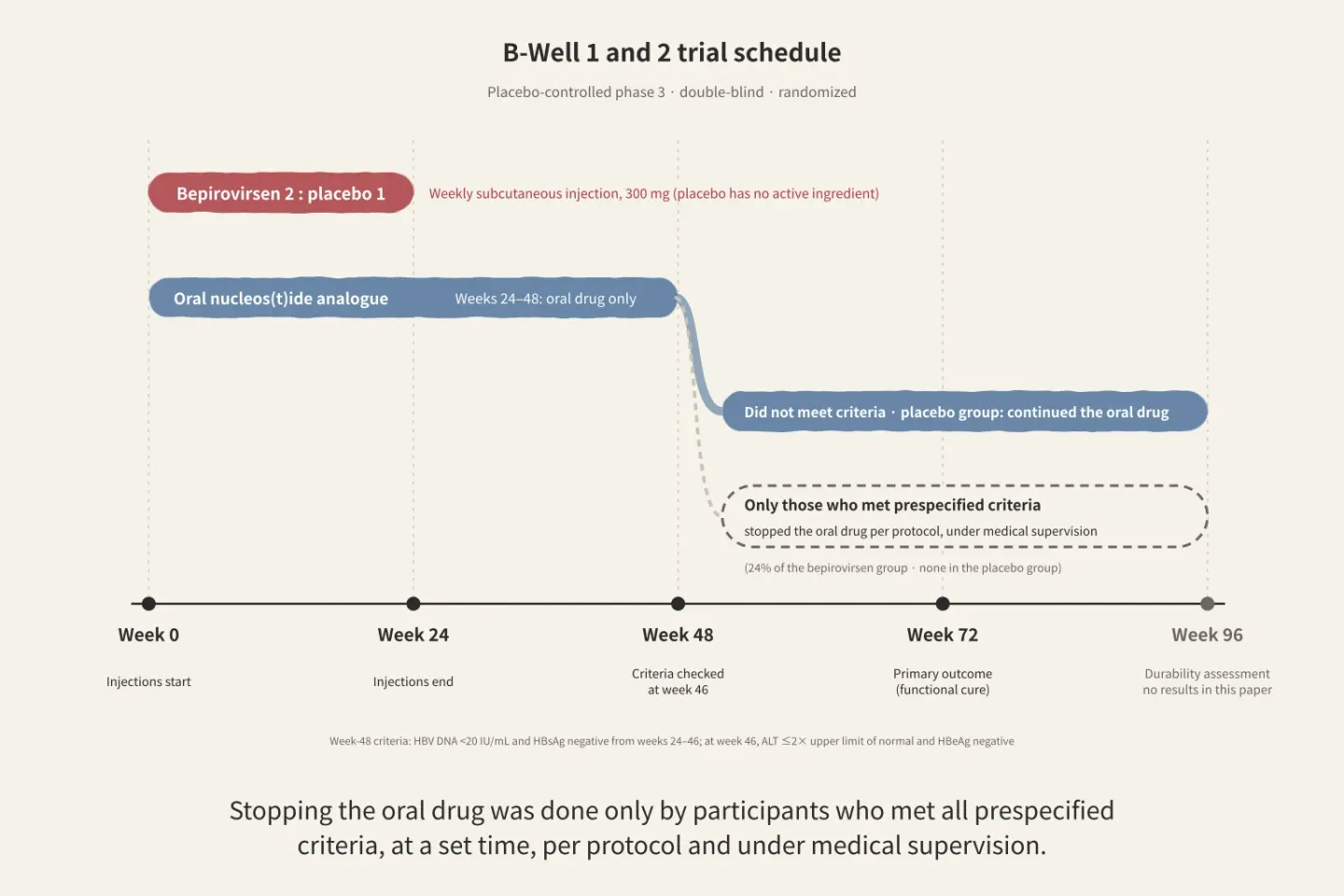
Figure: a diagram Paperis drew using only what the article says
Stopping oral medication in this trial was something participants who met all pre-specified criteria did at a designated time, according to the trial protocol, under the care of medical staff. There is a reason it was designed this way so strictly. In a literature review collecting people who stopped nucleos(t)ide analogues, the cumulative rate of clinical relapse between 24 and 144 weeks after stopping varied greatly across studies from 40% to 65%, and the median rate of surface antigen clearance was 2% at 24 weeks and 11% at 192 weeks after stopping. The participants in these studies are mostly people who stopped the drug while surface antigens remained. The authors concluded that because differences between studies were large, current data cannot strongly recommend stopping the drug or discern who would benefit (PMID 39790247). Another review notes that people with cirrhosis should not stop oral medication because of the risk of liver function failing and death (PMID 39472177). A systematic review for American Association for the Study of Liver Diseases guidelines also concludes, albeit with low-certainty evidence, that people with remaining surface antigens should be cautious about stopping the drug (PMID 41186417).
Result ① One in Five
At week 48, the proportion of people who met the criteria to stop oral medications was 24% of the bepirovirsen group in both trials (159 of 650 in B-Well 1, and 136 of 570 in B-Well 2) (PMID 42206582). Functional cure at week 72 was seen in 127 of 650 people (20%) in the bepirovirsen group and 0 of 328 in the placebo group in B-Well 1, and in 106 of 570 people (19%) in the bepirovirsen group and 0 of 286 in the placebo group in B-Well 2 (PMID 42206582). Both comparisons showed differences that were hard to dismiss as chance (P<0.001). The proportion of people who completed the 24-week course of injections was similar across both trials and both groups, ranging from 89% to 93% (PMID 42206582). Two identically designed trials yielded results in the same direction and of similar magnitude. The authors suggest that running the same trial twice and recruiting participants from multiple countries strengthens the evidence for the effect (PMID 42206582).
Outcomes varied depending on the surface antigen levels at the start. In the stratum with levels at or below 1,000 IU, functional cure rates were 25% (105 of 426) and 28% (95 of 342), whereas in the stratum with levels above 1,000 IU, they were 10% and 5% (PMID 42206582). In both strata, the placebo group was 0% (PMID 42206582). The proportion of people who met the criteria to stop oral medications was also higher in the low stratum at 31% and 33%, compared to 24% overall (PMID 42206582). People who achieved functional cure generally had undetectable surface antigens already around week 12 (PMID 42206582). Among those who achieved functional cure, antibodies against the surface antigen that were absent at baseline newly developed in 67% (79 of 118) and 64% (66 of 103), though this is a post-hoc analysis (PMID 42206582). Only 8% of the total participants were e-antigen positive, among whom functional cure rates were 11% (6 of 55) and 5% (2 of 43) (PMID 42206582).
There are also people in whom surface antigens remained, but viral DNA became undetectable. At week 72 after stopping oral medications, the proportion of people with viral DNA below the limit of quantification was 23% in both trials (151 of 650, and 132 of 570), while the placebo group was 0% (PMID 42206582). Among them, 4% and 5% still had surface antigens remaining and thus fell short of a functional cure (PMID 42206582). Of the 295 people who met the criteria to stop medications, 5 (2%) had detectable viral DNA again at week 72, but it was below 2,000 IU/mL, and up to this point at 24 weeks post-cessation, no one met the trial's definitions for viral or clinical relapse (PMID 42206582). Subsequent outcomes are not covered in this paper.
Following this schedule from the perspective of a single person in the bepirovirsen group connects the numbers in a single line. During the first 4 weeks, injection-site reactions such as swelling or redness were the most common, experienced by 53% of this group (PMID 42206582). Around weeks 5 to 10, many people experienced an elevation in ALT, which generally coincided with a sharp drop in surface antigens (PMID 42206582). People who later achieved functional cure generally had undetectable surface antigens already around week 12 (PMID 42206582). After the injections ended at week 24 while oral medications were continued, those who met all criteria at the week 46 evaluation stopped their oral medications at week 48. Those people accounted for 24% of the bepirovirsen group, and those determined to have achieved a functional cure at week 72 were 20% and 19% (PMID 42206582). Everyone in the placebo group continued taking oral medications at the week 48 mark of this pathway (PMID 42206582).
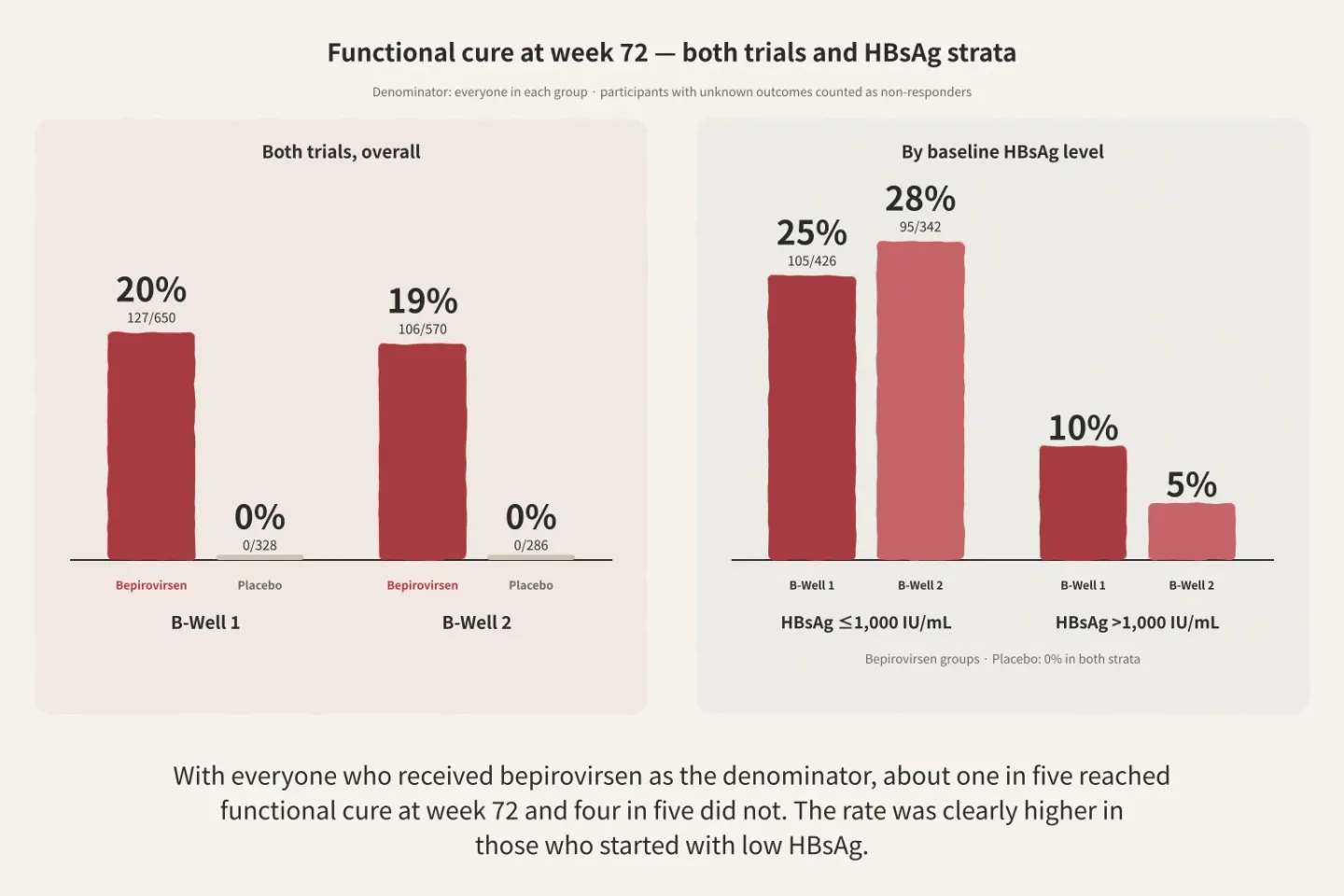
Figure: a diagram Paperis drew using only what the article says
Reading these results literally, taking all recipients of bepirovirsen as the denominator, one in five people achieved functional cure at week 72, while four did not. That proportion was markedly higher in people who started with low surface antigen levels.
Result ② Adverse Events
During the 24 weeks of receiving injections, anyone who experienced at least one adverse event was 89% in the bepirovirsen group and 65% in the placebo group, with most occurring within 12 weeks (PMID 42206582). The most common was an injection-site reaction at 53% versus 14% (PMID 42206582). It mainly occurred in the first 4 weeks and was mostly mild with nothing serious (PMID 42206582).
The numbers for the heavier side were also higher than placebo. Over the same period, grade 3 (severe) or higher adverse events were 16% versus 3%, of which the most common was an ALT elevation (6%) (PMID 42206582). Serious adverse events were 4% versus 1%, and serious adverse events considered by the investigators to be related to bepirovirsen were 2% (PMID 42206582). People who temporarily stopped or delayed injections because of adverse events were 16% versus 2%, and those who stopped altogether were 3% of the bepirovirsen group (PMID 42206582). Expanding out to 72 weeks, adverse events were 91% versus 73%, and serious adverse events were 7% versus 4% (PMID 42206582).
People whose ALT rose above 3 times the upper limit of normal accounted for 24% of the bepirovirsen group during the injection period (PMID 42206582). Most occurred at 5 to 10 weeks and went hand in hand with the timing of surface antigen drops (PMID 42206582). No one met the criteria for drug-induced liver injury (PMID 42206582). The authors view the temporary ALT elevation early in the injections as a marker of treatment response to bepirovirsen, noting that most did not require a change in treatment (PMID 42206582). A post-hoc exploratory analysis of blood from 82 phase 2b participants also suggests that this drug can stir the immune system to help kill infected liver cells, and that the ALT rise may thus reflect a treatment response (PMID 41042426). However, this interpretation is exploratory-stage evidence.
There were other test abnormalities as well. Immune-related adverse events such as blood vessel inflammation and complement activation were 33% versus 12%, and fewer than 1% of people met the criteria to pause or stop treatment (PMID 42206582). Cases where the drug may have injured blood vessels mostly appeared as vasculitis with purplish spots springing up on the skin, sometimes accompanied by joint pain, and disappeared after stopping treatment (PMID 42206582). People who ever had their platelets drop below 100,000 per mm³ were 10% in the bepirovirsen group (119 out of 1,223 people) and under 1% in the placebo group (3 out of 611 people), and no meaningful bleeding considered due to the drug was reported (PMID 42206582). Kidney function numbers dropped during the injections and returned close to initial levels at 72 weeks (PMID 42206582). There were deaths in the bepirovirsen group: 1 from aortic dissection, 1 following a drowning accident, and 1 from pancreatic cancer after dropping out of the trial, all of which the investigators judged to be unrelated to the drug (PMID 42206582).
The authors report that regular blood tests and measures to temporarily pause injections could reduce meaningful adverse events, and note that if used in actual practice moving forward, following the recommended monitoring and dose-adjustment criteria will be most important (PMID 42206582). Because liver numbers also rise at the time effects appear, this injection was tested from the start paired with regular blood tests.
What This Result Says
It was 9 to 10% in Phase 2b (PMID 36346079), and 20% and 19% in two Phase 3 trials where only people with a surface antigen of 3,000 IU or less were gathered and even their oral medications were stopped and measured (PMID 42206582). Because the target groups and judgment criteria differ, they cannot be read as a change in the same numbers. Although the designs are different from one another, a meta-analysis gathering 19 new chronic hepatitis B treatment clinical trials from 2018 to 2023 and 1,789 patients without cirrhosis showed that the functional cure rate at the end of follow-up was 0.0% (PMID 40528088). In people who merely stopped oral medication, the proportion in whom the surface antigen disappeared at 24 weeks after stopping was a median of 2% (PMID 39790247). The authors' conclusion is that 24 weeks of bepirovirsen led to a functional cure in 20% and 19% of chronic hepatitis B patients whose virus was suppressed and whose surface antigen was 3,000 IU or less, and that these patients benefited compared to standard treatment where oral medication is taken continuously (PMID 42206582).
There is also a different yardstick. A 2019 treatment goals workshop suggested that a surface antigen loss of 30% or more in Phase 3 trials is an acceptable response rate (PMID 31730789). It is difficult to directly compare the 20% and 19% of this trial because they were measured by the stricter functional cure criterion rather than surface antigen loss, but numerically it is lower than that suggestion. In the stratum where surface antigens started low, it was 25% and 28% (PMID 42206582).
The same workshop set the sustained state where viral DNA is not caught after finishing treatment, even if surface antigens remain, as an intermediate goal (PMID 31730789). In this trial, such people were 4% and 5% (PMID 42206582). The authors note that regulatory agencies recognize viral DNA remaining below the quantitation limit, regardless of surface antigens, as an alternative outcome for finite treatment, and 23% in both trials at 72 weeks, and 29% and 33% in the low surface antigen stratum, reached this criterion including functional cure (PMID 42206582).
As surface antigen levels divide the results, tests measuring those levels have become important. The authors estimate that about two-thirds of patients with surface antigen level data may fit the 3,000 IU or less condition, while noting that this estimate varies by region, age, and treatment status (PMID 42206582). Therefore, they consider that quantitative surface antigen tests need to be used more widely to find eligible subjects in actual clinical practice (PMID 42206582).
As the next step for four out of five people, the authors cite methods of sequencing or combining with other drugs (PMID 42206582). Antisense oligonucleotides and small interfering RNAs are the virus-targeting drugs most advanced in development, and multiple combination trials tied with immune modulators are underway (PMID 39541952). In a Phase 2b trial (108 people, oral medication continued) that sequenced pegylated interferon after bepirovirsen, 9% and 15% of people had surface antigens and DNA suppressed for 24 weeks after finishing pegylated interferon, and the researchers presented this as a proof of concept showing the possibility of reducing relapse (PMID 39214467). This trial was an open-label design and an indirect comparison with other trials (PMID 39214467).
What This Trial Has Not Yet Measured
Week 72 is the point 24 weeks after stopping the oral medication. Evaluation of persistence up to week 96 is ongoing and this paper has no results for it, and the authors write that it will be looked at consecutively in a separate long-term follow-up trial as well (PMID 42206582). How well functional cure is maintained even 72 weeks later is something this trial has not yet reported. Looking at functional cure achieved with other treatments, early cases with peginterferon tend to be maintained for a long time, but more than 10% relapsed and most within 48 weeks (PMID 39662778).
Long-term outcomes like liver cancer or cirrhosis are also not what this trial measured. People whose surface antigen has disappeared have a better course (PMID 36243037), but the risk does not disappear. In an observational study in Hong Kong following 9,769 people whose surface antigens disappeared for a median of 4.6 years, liver cancer developed in 106 people (1.1%), and while the risk of liver function breaking down decreased over time, the risk of liver cancer did not decrease over time (PMID 36463985). One review writes to view functional cure not as the end of the disease, but as the start of a new period requiring individual risk assessment and surveillance (KCI ART003328126). Whether bepirovirsen reduces liver cancer is not a question this trial answered.
The scope of participants is also narrow. The results came from people without cirrhosis, whose virus is suppressed by oral medication, and whose surface antigen is between 100 and 3,000 IU (PMID 42206582). Around 92% of the participants were e-antigen negative (PMID 42206582). The authors write that generalization to some groups may be limited because the number of people in subgroups was small and there were few Black and Hispanic participants (PMID 42206582). Another limitation pointed out by the authors is that because random allocation was stratified centrally, the average starting surface antigen levels may have differed from country to country (PMID 42206582).
Looking at the situation in Korea, this question is close to home. The 7-year prevalence of chronic hepatitis B in Korea measured using Health Insurance Review and Assessment Service claims data was 0.9%, and was higher at 1.6% in ages 45-54 and 1.1% in men (PMID 37768482). The 2022 Korean Liver Cancer Association guidelines list liver cancer as the fourth most common cancer in Korean men, and write that the prevalence of chronic hepatitis B is high among middle-aged and older adults in Korea (PMID 36263666). There is data showing it is decreasing in young women. In data of 145,993 women aged 20–49 tested at one hospital from 2001 to 2018, the surface antigen-positive rate dropped from 5.1% in 2001 to 2.5% in 2018, and the researchers interpret this as the result of nationwide vaccination preventing mother-to-baby transmission (PMID 33217571). How many Korean patients fit the target conditions of this trial cannot be known from the evidence gathered in this article.
What this trial has shown is up to this: when people under set conditions received injections for 24 weeks and only those who met the criteria stopped their oral medication as planned, one in five people who received the injections reached a functional cure at week 72.
Where to Look Further
- "What Does the Liver Do, and What Do Liver Tests Measure? — The Factory at the Gate, and the Signal That Leaks Through the Wall" — What ALT, which appeared in this trial's adverse events section, actually measures.
- "How Do Fatty Liver, Hepatitis and Cirrhosis Connect? — Ground That Hardens as Scars Build Up, and the Stretch Where You Can Still Turn Back" — Why this trial excluded patients with cirrhosis, and the path from hepatitis to cirrhosis.
- "Is the Randomized Controlled Trial Really the 'Gold Standard'?" — What double-blinding, placebos, and random allocation prevent and what they cannot.
- "How Does the Immune System Tell 'Self' from 'Other'? — Guards at the Gate, and a Patrol That Remembers Faces" — Which layer of innate immunity is stimulated by bepirovirsen.
Source Papers
- "Phase 3 Results of Bepirovirsen Treatment for Chronic Hepatitis B Virus Infection." (2026) — PMID 42206582 — B-Well 1 and 2 (29 countries, double-blind 2:1, 1,834 participants analyzed), 24-week injections and 48-week criteria-met participants stopped oral medication, 72-week functional cure 20% (127/650) and 19% (106/570) versus placebo 0, adverse events grade 3 or higher 16% versus 3%, GSK research funding (author-accepted manuscript).
- "Efficacy and Safety of Bepirovirsen in Chronic Hepatitis B Infection." (2022) — PMID 36346079 — Phase 2b B-Clear, 300mg for 24 weeks showed 9~10% surface antigen and DNA clearance 24 weeks post-treatment, larger and longer trials needed.
- "HBV cccDNA: viral persistence reservoir and key obstacle for a cure of chronic hepatitis B." (2015) — PMID 26048673 — cccDNA is a persistent reservoir inside the nucleus and the template for all viral RNA, a key obstacle preventing a cure.
- "Achieving chronic hepatitis B functional cure: Factors and potential mechanisms." (2025) — PMID 39662778 — Nucleos(t)ide analogues cannot act on cccDNA, and pegylated interferon-based functional cure also relapses in over 10% (mostly within 48 weeks).
- "Review article: novel therapies for hepatitis B virus cure - advances and perspectives." (2016) — PMID 27302653 — Remaining cccDNA causes viral relapse after treatment discontinuation.
- "The scientific basis of combination therapy for chronic hepatitis B functional cure." (2023) — PMID 36631717 — Deep viral suppression alone does not lead to surface antigen reduction or clearance.
- "Discontinuation of Nucleos(t)ide Analogues in HBeAg Negative Chronic Hepatitis B Patients: Risks and Benefits." (2024) — PMID 39005698 — Surface antigen clearance with nucleos(t)ide analogues is about 1%, and e antigen-negative patients usually require lifelong treatment.
- "Current Best Practice in Hepatitis B Management and Understanding Long-term Prospects for Cure." (2023) — PMID 36243037 — Surface antigen clearance is associated with a better clinical course, and complete cure requires the elimination of cccDNA and integrated DNA.
- "Guidance for design and endpoints of clinical trials in chronic hepatitis B - Report from the 2019 EASL-AASLD HBV Treatment Endpoints Conference‡." (2020) — PMID 31730789 — Phase 3 primary endpoint is functional cure, proposing surface antigen clearance of 30% or higher as an acceptable response rate.
- "HBV cure: why, how, when?" (2016) — PMID 27447092 — Even in functional cure, cccDNA remains transcriptionally inactive, and complete cure requires cccDNA elimination.
- "Targeting Hepatitis B Virus DNA Using Designer Gene Editors." (2023) — PMID 37778776 — cccDNA and integrated DNA are not targets of current treatments.
- "Bepirovirsen induces innate immune activation in the liver potentially through TLR8 signaling." (2026) — PMID 42264034 — Human samples and mouse experiments show innate immune stimulation by bepirovirsen, partly via TLR8.
- "Nucleos(t)ide Analog Treatment Discontinuation in Chronic Hepatitis B Virus Infection: A Systematic Literature Review." (2025) — PMID 39790247 — Clinical relapse after nucleos(t)ide analogue discontinuation is 40~65%, median surface antigen clearance is 2% at 24 weeks to 11% at 192 weeks, with high heterogeneity between studies.
- "Why and when could nucleos(t)ide analogues treatment be withdrawn?" (2025) — PMID 39472177 — Patients with cirrhosis should not stop oral medication due to the risk of liver function worsening and death.
- "Technical systematic review supporting the 2025 AASLD Practice Guideline on management of chronic hepatitis B." (2026) — PMID 41186417 — Discontinuing drugs in a state of viral suppression without surface antigen clearance should be done with caution.
- "Immunomodulation by bepirovirsen may induce killing of infected hepatocytes (B-Together study)." (2026) — PMID 41042426 — Post-hoc exploratory analysis of 82 participants, immunomodulation may help kill infected hepatocytes and ALT elevation can reflect treatment response.
- "Functional cure with new antiviral therapy for hepatitis B virus: a systematic review and meta-analysis." (2025) — PMID 40528088 — Functional cure rate was 0.0% across 19 new treatment trials and 1,789 participants from 2018 to 2023.
- "Prospect of emerging treatments for hepatitis B virus functional cure." (2025) — PMID 39541952 — Antisense and small interfering RNAs are the most advanced virus-targeting drugs, with combination trials with immunomodulators ongoing.
- "Sequential Peg-IFN after bepirovirsen may reduce post-treatment relapse in chronic hepatitis B." (2025) — PMID 39214467 — Open-label phase 2b trial of 108 participants, peg-IFN following bepirovirsen yielded primary endpoints of 9% and 15%, suggesting reduced relapse via indirect comparison.
- "Risk of hepatic decompensation but not hepatocellular carcinoma decreases over time in patients with hepatitis B surface antigen loss." (2023) — PMID 36463985 — Hong Kong cohort of 9,769 participants with surface antigen loss showed 1.1% liver cancer at a median of 4.6 years, and liver cancer risk does not decrease over time.
- "Real-World Epidemiology, Treatment Patterns, and Disease Burden of Chronic Hepatitis B and HDV Co-Infection in South Korea." (2023) — PMID 37768482 — HIRA data, South Korean chronic hepatitis B 7-year prevalence 0.9%, 45~54 years 1.6% and males 1.1%.
- "2022 KLCA-NCC Korea practice guidelines for the management of hepatocellular carcinoma." (2022) — PMID 36263666 — Liver cancer is the 4th leading cause of cancer in South Korean men, and South Korea has a high prevalence of chronic hepatitis B among middle-aged and older adults.
- "Hepatitis B surface antigen and antibody positivity among women of childbearing age after three decades of universal vaccination in South Korea." (2021) — PMID 33217571 — Single hospital data of 145,993 women aged 20~49, surface antigen positivity dropped from 5.1% in 2001 to 2.5% in 2018, suggesting successful prevention of vertical transmission.
- "만성 B형간염 기능적 완치 이후 잔존 위험의 정밀 예측 전략" (2026) — KCI ART003328126 — Even after functional cure, liver cancer risk remains, so this should be seen as the beginning of a period requiring personalized risk assessment and surveillance.
Sources (23)
- Phase 3 Results of Bepirovirsen Treatment for Chronic Hepatitis B Virus InfectionPMID 42206582
- Efficacy and Safety of Bepirovirsen in Chronic Hepatitis B InfectionPMID 36346079
- HBV cccDNA: viral persistence reservoir and key obstacle for a cure of chronic hepatitis BPMID 26048673
- Achieving chronic hepatitis B functional cure: Factors and potential mechanismsPMID 39662778
- Review article: novel therapies for hepatitis B virus cure - advances and perspectivesPMID 27302653
- The scientific basis of combination therapy for chronic hepatitis B functional curePMID 36631717
- Discontinuation of Nucleos(t)ide Analogues in HBeAg Negative Chronic Hepatitis B Patients: Risks and BenefitsPMID 39005698
- Current Best Practice in Hepatitis B Management and Understanding Long-term Prospects for CurePMID 36243037
- Guidance for design and endpoints of clinical trials in chronic hepatitis B - Report from the 2019 EASL-AASLD HBV Treatment Endpoints Conference‡PMID 31730789
- HBV cure: why, how, when?PMID 27447092
- Targeting Hepatitis B Virus DNA Using Designer Gene EditorsPMID 37778776
- Bepirovirsen induces innate immune activation in the liver potentially through TLR8 signalingPMID 42264034
- Nucleos(t)ide Analog Treatment Discontinuation in Chronic Hepatitis B Virus Infection: A Systematic Literature ReviewPMID 39790247
- Why and when could nucleos(t)ide analogues treatment be withdrawn?PMID 39472177
- Technical systematic review supporting the 2025 AASLD Practice Guideline on management of chronic hepatitis BPMID 41186417
- Immunomodulation by bepirovirsen may induce killing of infected hepatocytes (B-Together study)PMID 41042426
- Functional cure with new antiviral therapy for hepatitis B virus: a systematic review and meta-analysisPMID 40528088
- Prospect of emerging treatments for hepatitis B virus functional curePMID 39541952
- Sequential Peg-IFN after bepirovirsen may reduce post-treatment relapse in chronic hepatitis BPMID 39214467
- Risk of hepatic decompensation but not hepatocellular carcinoma decreases over time in patients with hepatitis B surface antigen lossPMID 36463985
- Real-World Epidemiology, Treatment Patterns, and Disease Burden of Chronic Hepatitis B and HDV Co-Infection in South KoreaPMID 37768482
- 2022 KLCA-NCC Korea practice guidelines for the management of hepatocellular carcinomaPMID 36263666
- Hepatitis B surface antigen and antibody positivity among women of childbearing age after three decades of universal vaccination in South KoreaPMID 33217571