
Paperis Articles
Two Laps with Robin, the AI Scientist — What the Machine Did and What People Did in a Macular Degeneration Experiment
Robin read widely to propose hypotheses and experimental directions and analysed the data; people chose the candidates and ran the cell experiments by hand. The drug that came out of two laps, ripasudil, is already approved for glaucoma in Japan, and the results are still at the stage of cells in a dish.
Your field's papers, as audio
Pick your fields and journals — Paperis summarizes the key papers and turns them into audio. Listen on your commute.
Start Paperis free →Two Laps with Robin, the AI Scientist — What the Machine Did and What People Did in a Macular Degeneration Experiment
A Disease Name Handed Over by the Researchers
What the researchers handed to the AI system "Robin" was a single disease name. It was dry age-related macular degeneration. Dry age-related macular degeneration is a disease in which cells in the center of the retina slowly disappear, unlike the wet type of age-related macular degeneration that develops with age where abnormal blood vessels grow and leak. Well over 85% of macular degeneration is this form. The wet type can be managed with injections that block vascular endothelial growth factor, but there is still no curing treatment for the dry type (PMID 41516080). At the advanced stage where the disease has deepened, areas where light-receiving cells and their supporting cells behind them in the center of the retina have vanished together spread outward (PMID 39836449).

Figure: A re-creation of a scene as it might look to a person with age-related macular degeneration; the center of the view is blurred. · National Eye Institute (NEI) · Wikimedia Commons (public domain)
The first approved drugs for that advanced stage came out in the United States in 2023. They are two injectable drugs that suppress a branch of the immune system, administered repeatedly into the eye. In Europe, manufacturers withdrew their approval applications. This was after a committee of the European Medicines Agency judged that the effect of slowing the spread of atrophy did not translate into a meaningful functional benefit for patients (PMID 39836449). A study re-analyzing multiple randomized trials paints the same picture. Drugs in this class are likely to reduce the rate at which the area of atrophy grows, but are unlikely to improve visual acuity at the 12-month mark, and are likely to increase the occurrence of new wet macular degeneration. Side effects in the eye increased, and whole-body side effects are likely to show little difference from sham injections (PMID 38008405). According to figures cited by the authors, in the United States alone there are 1.5 million patients with vision-threatening dry macular degeneration and 600,000 people who are legally blind due to macular degeneration, and this number of blind individuals is projected to nearly triple by 2050 (PMID 42156546). The problem given to Robin was a disease with narrow treatment options.
This paper was published in Nature in 2026 by researchers affiliated with FutureHouse (PMID 42156546). What the authors put forward as the motivation for this experiment is the time lag in drug repurposing. Drug repurposing is the practice of diverting drugs already used for other diseases to treat new ones. Dabrafenib, used for various cancers with mutations in a gene called BRAF, had its mechanism of action well understood around 2010. Yet its effect of preventing hearing loss was discovered 10 years later only through screening experiments testing numerous compounds at once. The authors write that that effect directly followed from already known BRAF inhibition (PMID 42156546). The authors draw a conclusion from this. There are more repurposing opportunities to be found simply by logically connecting pieces already present in the literature, and handing that connection over to a language model is the starting point of this paper.
What Was Asked
There were already several AI systems that generate hypotheses. The gap the authors saw is the next step. No single system had ever connected the tasks of building hypotheses and experimental strategies, analyzing results from the lab, and revising hypotheses in light of new data (PMID 42156546). Robin is a multi-agent system built to connect that chain.
An agent is a language model that does not stop at generating text, but holds tools to read the web, open files, and execute commands. Unlike language models like ChatGPT that stop at answering in text, agents search for and read papers, and write and run analysis code. A multi-agent system is a structure where multiple agents talk to each other and work together. Inside Robin, an agent that reads literature and an agent that analyzes data each take on tasks, and Robin decides which one to call next between them.
The question is summarized like this: Can a system that connects the work of generating hypotheses from literature and analyzing experimental data into a single flow produce actual treatment candidates in the lab? While the authors write that Robin fully automates both hypothesis generation and data analysis, they call the entire connected achievement a "semi-autonomous" approach (PMID 42156546). In the place of that "semi" is the human in the lab. A review summarizing AI-assisted scientific research also concludes that connecting the flow into one does not make it fully automatic, and that formulating problems, interpreting results, and supervising still rely on human judgment (PMID 42891290).
Three Agents and the Place of Humans
Inside Robin, there are three named agents. Crow and Falcon are literature search agents built on top of the same literature question-answering system (PaperQA2), with Crow writing short summaries and Falcon writing deep reports. Besides papers, the two can search clinical trial reports and drug target databases. Finch is a data analysis agent. It handles data from experiments that count how much of which genes are turned on at once in cells (RNA sequencing) and measurements that shine light on cells one by one as they flow in a line (flow cytometry) (PMID 42156546). OpenAI's o4-mini was used as the language model that synthesizes literature and generates hypotheses, and Anthropic's Claude 3.7 Sonnet was used as the judge that ranks the hypotheses (PMID 42156546).
Rankings are determined by head-to-head matches. The judge language model is shown two proposals side by side and made to choose which one is better over and over, and a ranking is produced from those wins and losses. The prompt given to the judge was created based on results where experts directly compared and chose between candidates. Among the top 10 chosen by the judge made that way, an average of 7.25 overlapped with the experts' top 10. When the exact same head-to-head match was shown again, the judge chose the same side 88% of the time, compared to 61% for experts (PMID 42156546). Consistency is the property of repeating the same answer, and whether that answer is correct is ultimately decided by experiments.
Who did what within a single cycle is written in the methods and author contribution sections of the paper (PMID 42156546).
| Step | What Robin Did | What Humans Did |
|---|---|---|
| Start | — | Conceived the project and designed the experiment, handed over the disease name |
| Literature and Hypotheses | Created questions, chose candidate causative mechanisms, chose cell experiment models, drug candidates and evaluation reports, rankings | Reviewed the ranking list to choose candidates to test |
| Experiment | Proposed assay methods on which cells to use to measure what | Based on that proposal, planned the experimental procedure, grew cells, and performed the experiments by hand |
| Analysis | Finch wrote and ran analysis code, proposed follow-up experiments | Uploaded raw data and directed the analysis method, analyzed the same data separately as a control |
| Next Cycle | Interpreted results to produce new candidates | Judged whether a candidate satisfying the goal had emerged |
The authors write that Robin generated all hypotheses, experimental directions, data analyses, and data figures in the main text of this paper (PMID 42156546). The author contribution section of the same paper writes that three authors performed cell culture, experiments measuring the amount swallowed by cells, and RNA sequencing preparation, and that humans also analyzed the experimental data and verified Finch's output (PMID 42156546). Both statements are true together. The hypotheses and analyses were produced by Robin, while selection, experimentation, and control were handled by humans. According to the authors' explanation, this loop runs until a drug candidate satisfying to humans is obtained (PMID 42156546).
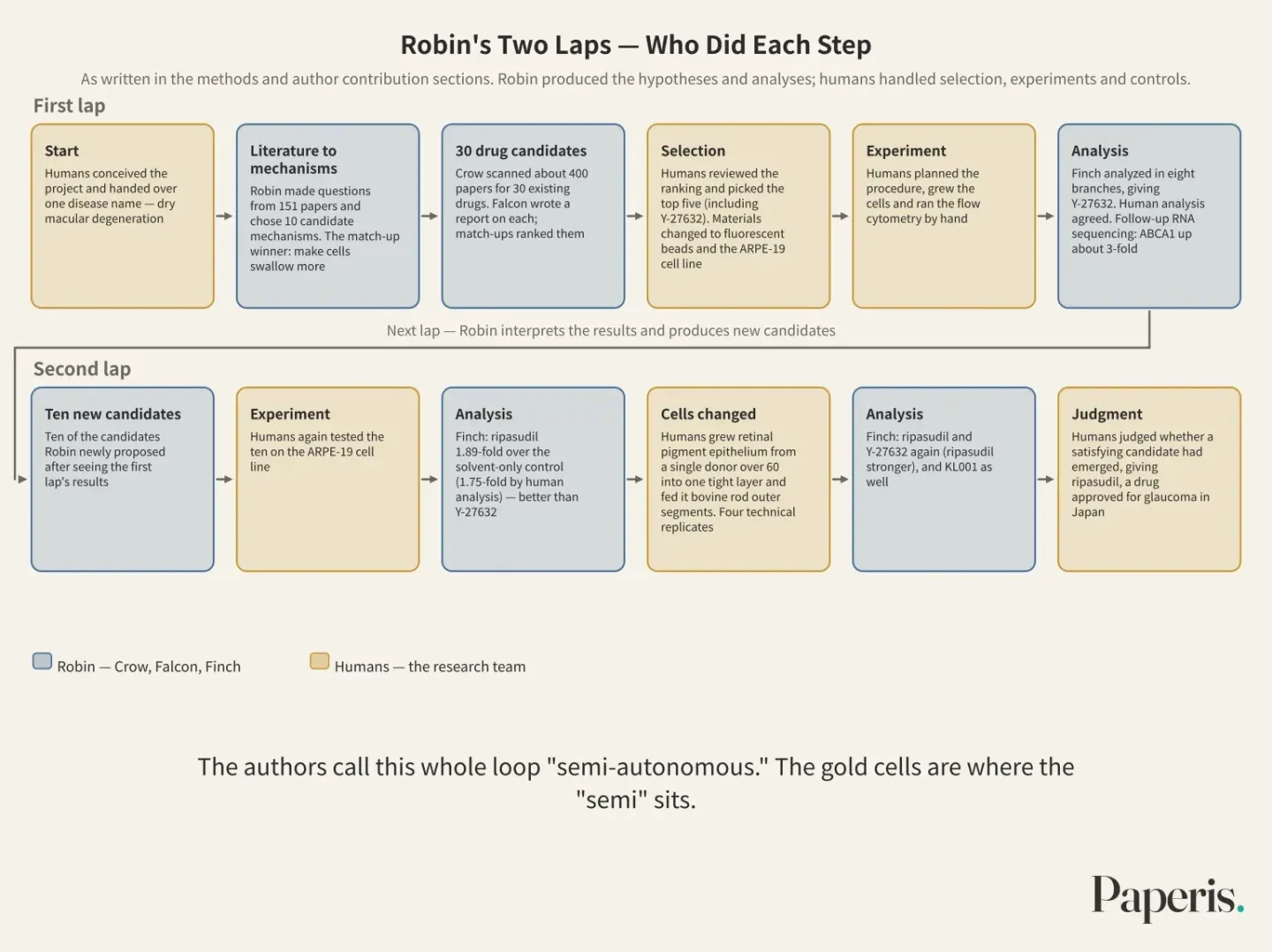
Figure: Robin's two laps. Blue boxes are Robin's steps, gold boxes are people's. The "semi" in what the authors call semi-autonomous is the gold boxes.
Following the First Cycle
The first cycle started from 151 papers. Robin made general questions about this disease and asked Crow, and based on those answers, picked 10 mechanisms that could be causes of dry macular degeneration. For each mechanism, Crow wrote a report on a cell experiment model to reproduce it on a dish, and the top rank was decided by a match-up of judges (PMID 42156546). The first place was a strategy to make cells that swallow the worn-out parts of light-receiving cells swallow more.
Retinal pigment epithelium is a layer of cells spread right behind light-receiving cells to take care of them. Phagocytosis is the act of a cell swallowing a chunk from the outside whole and breaking it down inside. Light-receiving cells are easily damaged by oxidation because of light, and the long-term health of those cells relies heavily on throwing away the worn-out outer tips. The only path to clear away those tips is the phagocytosis of the retinal pigment epithelium, and since the retinal pigment epithelium does not divide anymore, if it cannot break down what it swallowed, harmful debris piles up and leads to retinal disease (PMID 33281830). This swallowing is regulated according to the circadian biological clock (PMID 40586381). The authors cite previous studies showing that the phagocytosis of the retinal pigment epithelium drops with age and is more prominent in macular degeneration patients as the basis for this strategy (PMID 42156546). The direction Robin picked was to make the cells that clean up the retina's trash swallow more.
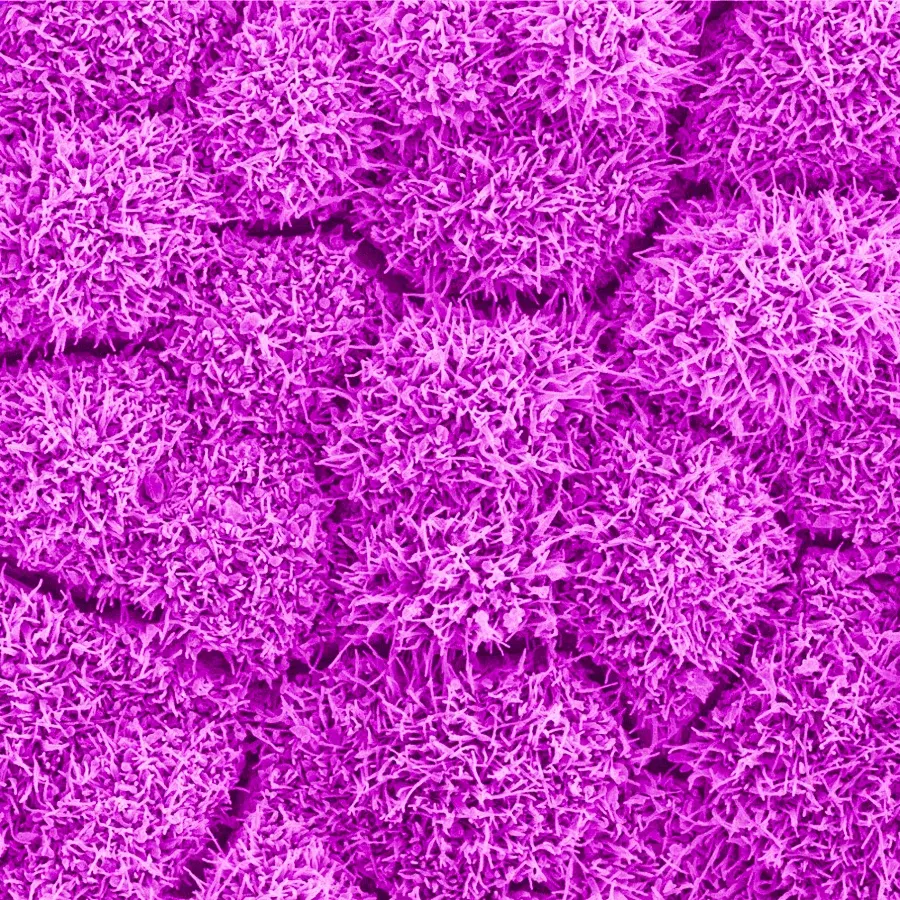
Figure: Lab-grown retinal pigment epithelium cells seen from above under a microscope. The image comes from a separate NIH study, not this paper. · National Eye Institute (NEI)/NIH · Wikimedia Commons (public domain)
Robin also decided the test method. The plan was to put drugs into retinal pigment epithelium cells obtained from patients or made from stem cells, and measure with flow cytometry how much more the cells swallow. Next, about 400 papers on phagocytosis and the treatment status of dry macular degeneration were scanned with Crow to produce 30 existing drug candidates to test, and after having Falcon write an evaluation report for each candidate, they were ranked through match-ups. The report included why the drug makes sense along with what limits it might have (PMID 42156546).
Here humans enter. Human scientists reviewed the ranked list and picked the top five candidates. They are exenatide, fingolimod, MFGE8, Y-27632, and the combination of AICAR and TUDCA. Among them, MFGE8 was already known to boost the phagocytosis of cultured retinal pigment epithelium, so it was included as a benchmark to check if the experiment runs properly (PMID 42156546). The materials were also changed by humans. Robin told them to feed outer segments of light receptor cells attached with fluorescent tags, but the researchers used easy-to-get fluorescent beads. Because these beads emit light only when they get into the acidic pocket inside the cell, only the swallowed amount can be counted. Robin recommended cells obtained from humans or made from stem cells, but for the first screening, ARPE-19, a cell line grown for a long time, was used to hurry the evaluation (PMID 42156546).
Once the experiment ended, the researchers uploaded the raw data, description info, and analysis instructions of the flow cytometry to Robin. Finch directly coded and ran the analysis to set the criteria for filtering data and run statistical tests. Because the analysis can change every time it runs due to the randomness of the language agent even if given the same data and the same instructions, the researchers set it up so that Finch analyzed separately in eight branches and synthesized those results to reach a consensus conclusion. The authors write that human scientists also choose different criteria to filter data from person to person (PMID 42156546). Y-27632 was caught in the results, and the results were the same even when humans analyzed the same data separately (PMID 42156546).
ROCK inhibitors are drugs that block Rho kinase, abbreviated as ROCK, an enzyme that regulates the skeleton and shape of cells. Y-27632 is a ROCK inhibitor used for research, and in previous studies, it has already revived the phagocytosis efficiency of retinal pigment epithelium cells. The authors write that this confirms the evidence Robin drew from the literature (PMID 42156546).
Seeing this result, Robin suggested the next experiment. The idea was to look with RNA sequencing at how gene expression changes in cells that received Y-27632. The researchers ran the phagocytosis experiment one more time and sequenced those samples. Humans handled aligning the read sequences to the genome, and Finch did the subsequent analysis to isolate the gene expression differences between the two conditions (PMID 42156546). Finch reported that genes involved in cell skeleton arrangement, intracellular signal transduction, and the pathway where cells break down debris inside themselves had changed. The authors interpret that Y-27632 can change the cell skeleton to help the initial swallowing step and also boost the debris breakdown side, while adding that the effect on the breakdown pathway needs to be verified separately (PMID 42156546). The most noticeable change was that a gene called ABCA1 increased by about 3 times (PMID 42156546). The first cycle left behind one drug caught as predicted by the literature and one gene to lead to the next question.
Second Lap — Ripasudil and KL001
On the second lap, the researchers tested ten of Robin’s newly suggested candidates, again using the ARPE-19 cell line. In Finch’s analysis, ripasudil performed better than Y-27632, increasing phagocytosis 1.89-fold compared to the control group treated only with the solvent (DMSO) without the drug. When the same data was analyzed by a human, it was 1.75-fold (PMID 42156546). This fold change is a value comparing the signals of fluorescent beads swallowed by cells on a dish. Ripasudil is a ROCK inhibitor approved in Japan for treating glaucoma (PMID 42156546). In the experiment testing various concentrations, ripasudil was stronger than Y-27632 (PMID 42156546).
Next, the cells were changed. The researchers received retinal pigment epithelium stem cells from a single donor over 60 years old with no known eye disease, sourced from the Eye-Bank for Sight Restoration in New York. These are some of the retinal pigment epithelial cells that can multiply to a certain extent in a culture dish. These cells were grown into a tight, single layer, and instead of fluorescent beads, fluorescently labeled rod outer segments obtained from bovine retinas were fed to them. The replication consists only of technical replicates measured four times within the same experiment using this single person's cells (PMID 42156546). This experiment is closer to the conditions Robin initially recommended.
When all the drugs suggested by Robin were tested again on these cells, ripasudil and Y-27632 were selected once more, and this time ripasudil was stronger. For both drugs, higher concentrations increased phagocytosis. When measuring an enzyme (LDH) that leaks out when cells are damaged, Y-27632 showed no relationship with concentration, and ripasudil leaked out even less as the concentration increased (PMID 42156546). In this single indicator measuring cytotoxicity, there was no sign that the high concentration on this dish damaged the cells more.
KL001 was also selected in the same cells. KL001 is a compound that regulates the circadian clock, preventing the CRY protein, a component of the circadian clock, from degrading. Robin selected this compound based on the fact that phagocytosis in the retinal pigment epithelium is controlled by the circadian clock, and the authors note that, "to our knowledge," no one had previously suggested KL001 as a substance that enhances phagocytosis (PMID 42156546). ABCA1 also increased in these cells treated with ripasudil (PMID 42156546).
Ripasudil is a drug approved as a glaucoma medication in Japan, and what this paper puts forward is a candidate to test whether that drug can be repurposed for dry age-related macular degeneration. The authors cite the fact that it is an approved drug with accumulated safety data as an advantage for translating it to humans over the research compound Y-27632 (PMID 42156546). That safety information comes from experience using it in glaucoma patients. A review summarizes that side effects reported after using ROCK inhibitors in glaucoma treatment include conjunctival hyperemia, corneal deposits, conjunctivitis, and blepharitis, most of which are mild (PMID 40190809). The authors also note that to definitively compare the two drugs, verification in living animals is necessary (PMID 42156546). The second lap replaced the answer of the first lap with a better candidate, and the fact that this candidate is already a drug approved for another disease determines the weight of this result.
ABCA1 — What is Known and What Was Newly Shown
Mice lacking ABCA1 and its partner protein ABCG1 specifically in the retinal pigment epithelium accumulated lipids in that cell layer, showed a decline in retinal function, and experienced the death of both the retinal pigment epithelium and light-sensing cells along with inflammation (PMID 30864945). ABCA1 is the gene that makes a pump to move cholesterol and phospholipids from the cell membrane out to extracellular carrier proteins (PMID 42156546). Variations in this gene have also been linked to the risk of macular degeneration in humans (PMID 30864945). The authors point out together that apolipoprotein E, the partner to which ABCA1 hands off lipids, has turned up as a genetic risk factor for macular degeneration in multiple studies (PMID 42156546).
Attempts to boost ABCA1 have already been made. When a drug that ramps up ABCA1 expression was used on retinal pigment epithelium made from induced pluripotent stem cells, the lipids inside the cells decreased (PMID 35328615). When an injection blocking miR-33—a small RNA that suppresses ABCA1—was given to old monkeys and to monkeys fed a high-fat, high-cholesterol diet, ABCA1 in the retinal pigment epithelium increased, and cholesterol accumulation and immune cell infiltration decreased (PMID 33744470).
The picture is not so simple. In mouse studies, an ABCA1 variation that raises the risk of macular degeneration lowered ABCA1 expression in human cell lines (PMID 30864945). In induced pluripotent stem cell studies, two risk variations actually increased the amount of ABCA1 while lowering the efficiency of pumping out cholesterol (PMID 35328615). The directions cross depending on the variation and cells examined, and in at least one study, having more ABCA1 did not mean better export.
What the Robin paper newly showed is the link where boosting phagocytosis with a ROCK inhibitor also increased ABCA1. The authors call ABCA1 a "potential new target" (PMID 42156546). Whether the rise in ABCA1 is the cause of the ripasudil effect or an accompanying change has not yet been sorted out by this paper, as it only measured expression levels. ABCA1 is a clue worth following, and its usefulness in macular degeneration is a topic that prior studies have already addressed.
What This Means
Most of the puzzle pieces forming the answer called ripasudil already existed. The authors note it as already known that ROCK inhibition increases the phagocytosis of the retinal pigment epithelium (PMID 42156546). There were also proposals to use ROCK inhibitors for wet macular degeneration and other retinal diseases with abnormal blood vessel growth (PMID 42156546). Another study published around the same time in animal models of wet macular degeneration reported that ripasudil suppressed subretinal scarring (PMID 42132459). There was also a 2020 experiment testing ripasudil in a retinal pigment epithelium cell line. This study looked at whether ripasudil reduced inflammation and damage caused by bacterial components (PMID 32252692).
Therefore, the scope of the authors' claim is narrowly defined. To the best of their knowledge, no one had proposed ripasudil as a treatment for dry macular degeneration, and Robin is among the first to suggest using ROCK inhibitors for dry macular degeneration via the mechanism of enhanced phagocytosis (PMID 42156546). What Robin did was take separately placed pieces and connect them in a new place: treating dry macular degeneration. The authors call this "combinatorial synthesis," meaning finding non-obvious connections between distant fields, and evaluate it as targeting low-hanging fruit that experts might overlook because knowledge is divided into silos (PMID 42156546).
The research team also tested whether this connection emerges from just any tool. They gave the same candidate-generation prompt to OpenAI’s general-purpose research agent, Deep Research, prompting it to produce 19 candidates. Excluding duplicates, there were 17, and when these were tested on cells from the same donor, not a single one passed. Deep Research did not suggest ROCK inhibition at all (PMID 42156546). This is the result of a comparison with one tool at one point around June 2025.
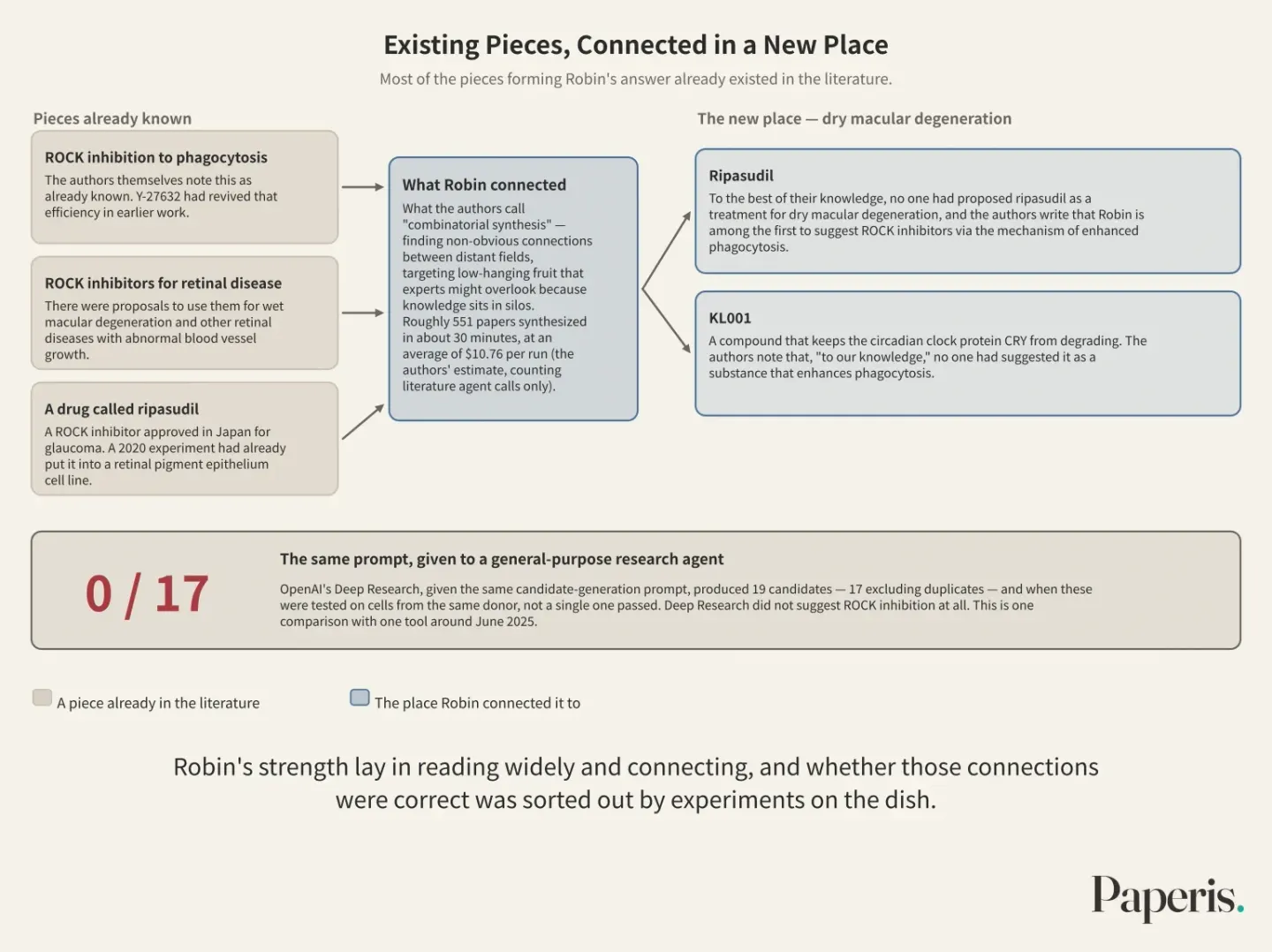
Figure: Pieces that already existed, placed somewhere new. Given the same prompt, a general research agent's 17 candidates included none that passed (one comparison with one tool, around June 2025).
There are also experiments excluding the literature agent. When o4-mini, given the same prompt, was substituted directly into Crow and Falcon's positions, fabricated references increased significantly. A scientist with an unknown background checked the proposal's citations one by one online, and if the original paper could not be confirmed, judged it as fabricated. Among 15 experimental proposal documents, zero citations added by Crow were fabricated, while 44.5% of those added by o4-mini were (PMID 42156546). This is the result showing that a design keeping the model anchored to the literature reduced fabricated evidence (PMID 42156546).
Costs and time are the authors' estimates. Running Robin once under this paper's setup cost an average of $10.76. This estimate counts only literature agent calls and excludes analysis agent costs. Robin synthesized roughly 551 papers in about 30 minutes, and the authors estimate that a human would take about 294 hours. Expanding to the entire knowledge-work of one discovery cycle, they estimate that 359 to 424 human hours drop to under 2 hours (PMID 42156546). This calculation includes only the thinking work and does not include the time to grow cells and run experiments.
There have been previous instances where hypotheses generated by language models were validated in the laboratory. Of 12 breast cancer cell drug combinations proposed by GPT4, 3 showed synergistic effects exceeding the criteria, and of 4 new combinations subsequently generated by GPT4 based on those results, 3 showed synergistic effects (PMID 40462712). What Robin added is putting an agent that directly analyzes raw data inside that loop. Whether an idea that looks plausible before an experiment remains so after execution must be asked separately. In one preprint, 43 experts randomly received research ideas from language models and human experts and tried executing them directly; after execution, evaluation scores dropped much more sharply for the language model side (arXiv:2506.20803, preprint, natural language processing field). Robin’s strength lay in reading widely and connecting, and whether those connections were correct was sorted out by experiments on the dish.
Where It Falls Short
All efficacy results in this paper came from cells in a culture dish. They were the long-maintained ARPE-19 cell line and retinal pigment epithelium cells obtained from a single donor, and the replication of those cells was only technical replicates measured four times within the same experiment. There are no animal experiments or tests on humans. The authors write that this hypothesis must be tested in an appropriate disease model and ultimately in a randomized placebo-controlled trial to confirm its validity in the clinic (PMID 42156546). The 1.89-fold is a multiple of the amount swallowed by the cells and is not a measurement regarding visual acuity. This paper put the drug in a dish containing cells and did not cover how to deliver the drug to the retinal pigment epithelium at the back of the human eye. What glaucoma approval tells us is the experience of using it in glaucoma patients, and this paper did not test efficacy and safety in macular degeneration patients. Among the results of this paper, none have been confirmed as a treatment that patients can use right now.
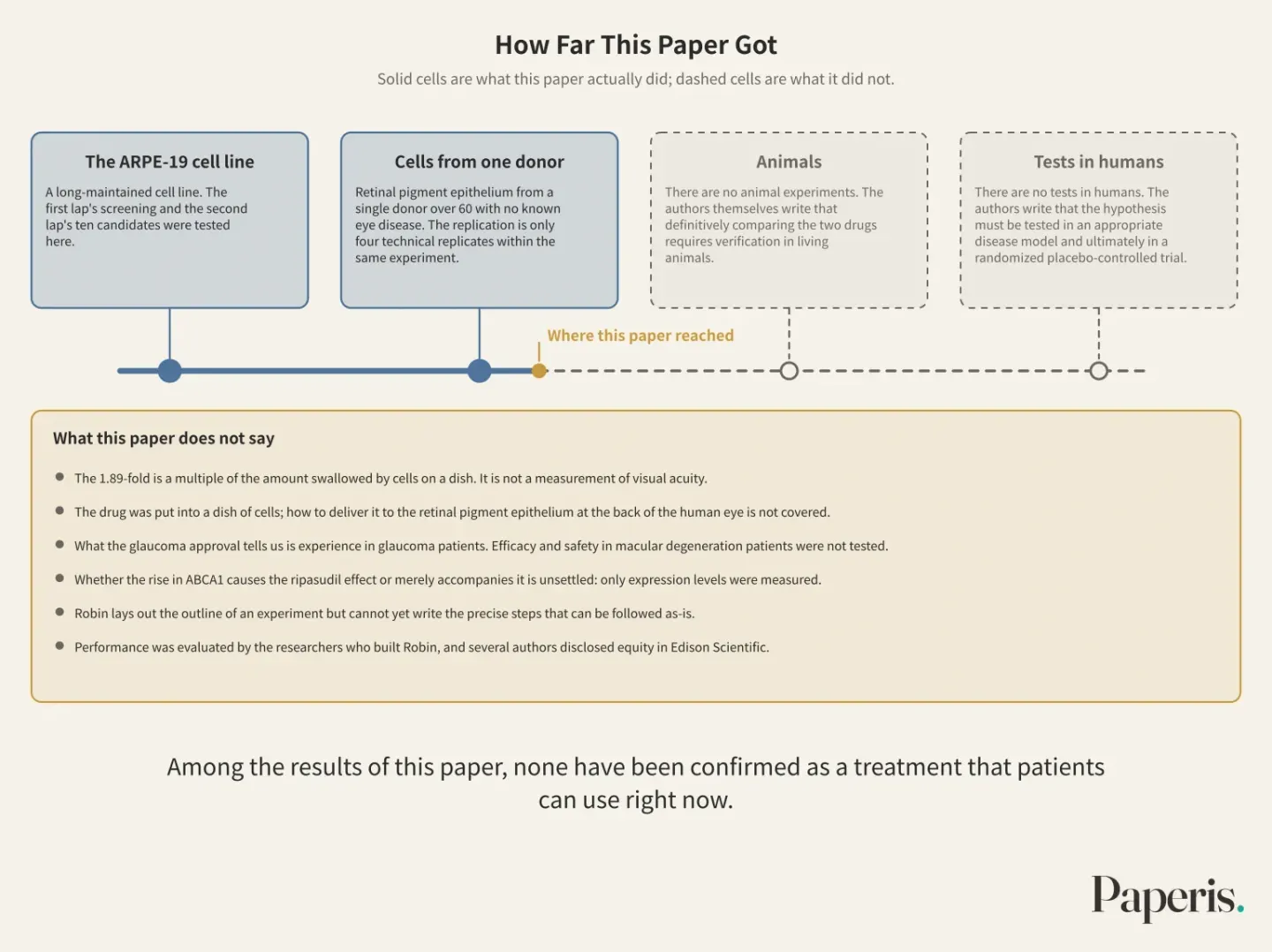
Figure: How far this paper got. Solid boxes are what it actually did; dashed boxes are what it did not.
The system also has limitations pointed out by the authors. Robin lays out the outline of an experiment but cannot yet write the precise steps that can be followed as-is. For Finch to produce reliable results, instructions refined by a domain expert are needed (PMID 42156546). When given the exact tasks and instructions from the second round of this paper, Finch followed the expert-made grading rubric with 86% adherence for RNA sequencing and 100% for flow cytometry (results run three times). The authors also looked at where Finch breaks down using a different, more difficult set of problems. When made to solve 170 bioinformatics and biostatistics test questions without the step-by-step task instructions given in the Robin workflow, the correct answer rate was 22.8%. Since it was 1.6% using just the same language model without tools, the gap is large, but it was 47.9% in statistics problems and 15.3% in bioinformatics problems requiring multiple steps (PMID 42156546). The former figure is how well it followed the grading rubric and the latter figure is the correct answer rate, so the problems and the grading methods are different. It did well when given familiar tasks following designated instructions, but answered more than three out of four incorrectly in the harder problem set.
The experiments in this paper were run with Robin implemented as an agentic approach. However, Robin called tools in almost the exact same order so that the workflow ran like a fixed procedure, and the researchers note that they later moved Robin to a notebook program running in a set order to improve stability and usability (PMID 42156546). It was an agentic approach, but the actual workflow was close to a fixed procedure. The results relied on a language model from early 2025, and performance was evaluated directly by the researchers who built Robin. Several authors disclosed that they hold equity in Edison Scientific, a company spun out from FutureHouse (PMID 42156546).
Other research has addressed these system-wide pitfalls. In an experiment attempting to reproduce social science paper results using the general-purpose chatbot ChatGPT where 288 people were randomly divided into 103 teams, the reproduction rates of human-only teams and AI-assisted teams were similar at 94% and 91%, while AI-led teams with minimal human supervision were 37% (PMID 42207915). While the authors view this autonomous approach's result as likely a lower bound of AI capability, they conclude that expert judgment remains indispensable for reliable verification (PMID 42207915). One preprint argues that because the literature features an overabundance of positive results and too few failed results, AI scientists relying on the literature can amplify that bias (arXiv:2606.04220, preprint). Given that Robin's strength lies in reading the literature broadly, this point may apply to Robin as well. Another preprint states that viewing execution logs and code from automated research processes reveals flaws much better than looking at completed papers alone, and recommends requiring such outputs to be shared together (arXiv:2509.08713, preprint). The Robin researchers made execution log samples and code public (PMID 42156546). Robin produced its current results only in places where humans selected, experimented, and controlled, and this paper did not test a setup where those roles are vacant.
The Co-Scientist on the Same Day
On the same day in the same journal, a multi-agent system built on Google's language model Gemini called "Co-Scientist" was also published. In this system, agents endlessly generate, criticize, and refine hypotheses, and make hypotheses clash with each other to advance. The authors report that they found a drug combination that increases efficacy when used with a repurposed candidate for acute myeloid leukemia and confirmed it through in vitro experiments (PMID 42156544).
The two systems are similar in that they select hypotheses through a showdown, and the leukemia drug candidate found by Co-Scientist was also confirmed in in vitro experiments. The emphasis lies elsewhere. Robin closed the loop from the agents analyzing raw data from the laboratory to moving on to the next hypothesis, while Co-Scientist focused on generating and having hypotheses compete to be verified by experiments (PMID 42156546) (PMID 42156544). How Co-Scientist makes hypotheses compete in a tournament is followed separately in "AI Co-Scientist — When Hypotheses Are Made to Compete in a Tournament".
If the sentence "AI found a drug" is rewritten to fit this paper, it is like this: The AI system read the literature broadly to produce candidates to test and testing methods, humans selected them and tested them on cells, and the AI analyzed the results to produce the next candidates. The candidate that came out after going through two rounds like that was a drug approved as a glaucoma drug in Japan, and what that drug does in the eyes of dry age-related macular degeneration patients must be answered by tests in animals and humans.
Source Papers
- "A multi-agent system for automating scientific discovery" (2026) — PMID 42156546 — FutureHouse's multi-agent system Robin (Crow, Falcon, Finch) proposed dry age-related macular degeneration candidates in a semi-autonomous loop. Phagocytosis enhancement strategy, Ripasudil 1.89-fold (human analysis 1.75-fold) and KL001 in vitro effects, ABCA1 roughly 3-fold in subsequent RNA sequencing. Experiments were done by humans and there is no animal or human validation.
- "Accelerating scientific discovery with Co-Scientist" (2026) — PMID 42156544 — Gemini-based multi-agent hypothesis generation system. Refined hypotheses through head-to-head competition and confirmed acute myeloid leukemia drug repurposing candidates in vitro.
- "Integrative Landscape of Dry AMD Pathogenesis, Models, and Emerging Therapeutic Strategies" (2025) — PMID 41516080 — Review stating that dry form accounts for over 85% of macular degeneration with no curative treatment, and the efficacy of US-approved complement inhibitors is limited.
- "Geographic Atrophy in Age-Related Macular Degeneration" (2025) — PMID 39836449 — Review stating that two intraocular injection complement inhibitors became the first approved drugs for geographic atrophy in the US in 2023, while applications were withdrawn in Europe after a judgment of no functional benefit.
- "The effect of complement C3 or C5 inhibition on geographic atrophy secondary to age-related macular degeneration: A living systematic review and meta-analysis" (2024) — PMID 38008405 — Meta-analysis showing that C3 and C5 inhibition likely reduces the increase in atrophy area but likely does not improve 12-month visual acuity, and likely increases the incidence of neovascular macular degeneration.
- "Phagocytosis by the Retinal Pigment Epithelial: Recognition, Resolution, Recycling" (2020) — PMID 33281830 — Review stating that the only way to clear photoreceptor outer segments is retinal pigment epithelium phagocytosis, and failure of degradation causes retinal disease due to toxic accumulation.
- "Retinal Pigment Epithelium Phagocytosis and Retinal Degenerative Diseases" (2025) — PMID 40586381 — Systematic review showing that retinal pigment epithelium phagocytosis is strongly regulated by the circadian clock.
- "Rho Kinase Inhibitors in Glaucoma Management: Current Perspectives and Future Directions" (2025) — PMID 40190809 — Review summarizing the glaucoma effects of ROCK inhibitors such as ripasudil and netarsudil, and mostly mild side effects such as conjunctival hyperemia.
- "Impaired ABCA1/ABCG1-mediated lipid efflux in the mouse retinal pigment epithelium (RPE) leads to retinal degeneration" (2019) — PMID 30864945 — Cell line data showing lipid accumulation and retinal degeneration in mice lacking ABCA1 and ABCG1 in the retinal pigment epithelium, and that risk variants lower ABCA1 expression.
- "Regulation of ABCA1 by AMD-Associated Genetic Variants and Hypoxia in iPSC-RPE" (2022) — PMID 35328615 — Induced pluripotent stem cell retinal pigment epithelium study showing that risk variants increased ABCA1 amounts while reducing efflux efficiency, and that drugs raising ABCA1 reduced lipid accumulation.
- "Targeting of miR-33 ameliorates phenotypes linked to age-related macular degeneration" (2021) — PMID 33744470 — Study showing that injections blocking miR-33 increased ABCA1 and reduced cholesterol accumulation in the retinal pigment epithelium of aged mice and high-fat diet monkeys.
- "RPE With ROCK-Mediated Epithelial-Mesenchymal Transition as a Key Contributor of Subretinal Fibrosis in AMD" (2026) — PMID 42132459 — Study showing that ripasudil suppressed subretinal scar formation in a wet macular degeneration model.
- "Ripasudil alleviated the inflammation of RPE cells by targeting the miR-136-5p/ROCK/NLRP3 pathway" (2020) — PMID 32252692 — In vitro study showing that ripasudil reduced inflammation induced by bacterial components (LPS) in ARPE-19 cells.
- "Scientific hypothesis generation by large language models: laboratory validation in breast cancer treatment" (2025) — PMID 40462712 — Laboratory validation where 3 out of 12 drug combinations proposed by GPT-4, and 3 out of 4 newly generated based on the results, showed synergistic effects.
- "The Ideation-Execution Gap: Execution Outcomes of LLM-Generated versus Human Research Ideas" (2025) — arXiv:2506.20803 (preprint) — Evaluation scores for language model ideas dropped more sharply than expert ideas when executed by 43 experts.
- "AI-assisted teams outperform AI-led teams but not human-only teams in assessing research reproducibility in quantitative social science" (2026) — PMID 42207915 — 288 people in 103 teams randomly assigned, concluding that reproducibility rates were humans 94%, AI-assisted 91%, AI-led 37%, and expert judgment is essential for verification.
- "Dead Science Walking: Publication Bias and the AI Scientist Pipeline" (2026) — arXiv:2606.04220 (preprint) — Argument that AI scientist pipelines relying on positive result-skewed literature can amplify that skew.
- "The More You Automate, the Less You See: Hidden Pitfalls of AI Scientist Systems" (2025) — arXiv:2509.08713 (preprint) — Four failure types of AI scientist systems, recommending execution logs and code as much more effective for finding flaws than final papers.
- "Unifying AI-assisted scientific discovery around exploration, hypothesis generation, and testing" (2026) — PMID 42891290 — Review stating that unified workflows do not mean full automation, and problem setup, interpretation, and supervision rely on human judgment.
Sources (19)
- A multi-agent system for automating scientific discoveryPMID 42156546
- Accelerating scientific discovery with Co-ScientistPMID 42156544
- Integrative Landscape of Dry AMD Pathogenesis, Models, and Emerging Therapeutic StrategiesPMID 41516080
- Geographic Atrophy in Age-Related Macular DegenerationPMID 39836449
- The effect of complement C3 or C5 inhibition on geographic atrophy secondary to age-related macular degeneration: A living systematic review and meta-analysisPMID 38008405
- Phagocytosis by the Retinal Pigment Epithelium: Recognition, Resolution, RecyclingPMID 33281830
- Retinal Pigment Epithelium Phagocytosis and Retinal Degenerative DiseasesPMID 40586381
- Rho Kinase Inhibitors in Glaucoma Management: Current Perspectives and Future DirectionsPMID 40190809
- Impaired ABCA1/ABCG1-mediated lipid efflux in the mouse retinal pigment epithelium (RPE) leads to retinal degenerationPMID 30864945
- Regulation of ABCA1 by AMD-Associated Genetic Variants and Hypoxia in iPSC-RPEPMID 35328615
- Targeting of miR-33 ameliorates phenotypes linked to age-related macular degenerationPMID 33744470
- RPE With ROCK-Mediated Epithelial-Mesenchymal Transition as a Key Contributor of Subretinal Fibrosis in AMDPMID 42132459
- Ripasudil alleviated the inflammation of RPE cells by targeting the miR-136-5p/ROCK/NLRP3 pathwayPMID 32252692
- Scientific hypothesis generation by large language models: laboratory validation in breast cancer treatmentPMID 40462712
- The Ideation-Execution Gap: Execution Outcomes of LLM-Generated versus Human Research IdeasarXiv:2506.20803
- AI-assisted teams outperform AI-led teams but not human-only teams in assessing research reproducibility in quantitative social sciencePMID 42207915
- Dead Science Walking: Publication Bias and the AI Scientist PipelinearXiv:2606.04220
- The More You Automate, the Less You See: Hidden Pitfalls of AI Scientist SystemsarXiv:2509.08713
- Unifying AI-assisted scientific discovery around exploration, hypothesis generation, and testingPMID 42891290