
Paperis Articles
The Single Hospital Room — What Changes Behind One Wall?
Many hospitals turned shared wards into single rooms, expecting them to reduce infection and benefit patients. Studies reported results favoring single rooms for some resistant-bacteria colonization, for parents' time at the bedside and for fewer patient moves within the hospital — but results split by pathogen, unit and study design, and most came from comparisons that did not randomize patients.
Your field's papers, as audio
Pick your fields and journals — Paperis summarizes the key papers and turns them into audio. Listen on your commute.
Start Paperis free →The Single Hospital Room — What Changes Behind One Wall?
The Hospital Moved in a Day
On April 26, 2015, a hospital in Montreal, Canada, moved all of its inpatients into a new building in a single day. The building they left was an old tertiary hospital with 417 beds, where most patient rooms were shared by three or four people. The building they entered was a new hospital with 350 beds, where every single room was occupied by one patient, and each room had its own private toilet, shower, and handwashing sink. The researchers recorded this event as the largest hospital relocation in Canadian history (PMID 31424489).
A single room is a hospital room used by one patient alone, while a multi-occupancy room is a room shared by two or more people. The hospital's shift from multi-occupancy rooms to single rooms rests on a long-standing expectation. According to a 2005 literature review, single rooms became the industry standard in the United States under the assumption that they reduce hospital infections, make care and operations easier, and are more beneficial for patient treatment. That review likewise concluded that single rooms reduce the risk of hospital infection and benefit treatment, while adding that the issue of room occupancy must be weighed alongside other care issues and operational policies (DOI: 10.1177/0013916504272658).
A hospital-acquired infection is a new infection that was not present upon admission but developed while staying in the hospital. The idea of determining building designs, such as patient rooms, through research findings has a name. Evidence-based design is an approach that seeks to determine design choices by relying on research connecting buildings with the outcomes of the people who spend time inside them. A 2008 broad review of research in this field listed replacing multi-occupancy rooms with single rooms as one of the design choices supported by evidence, noting that rigorous studies are increasing, particularly regarding the reduction of hospital infections (PMID 21161908).
Around the same time, a review with a different tone was also published. A 2007 literature review that selected 25 studies pointed out that randomized trials were rare, and concluded that while single rooms showed moderate effects on patient satisfaction, noise and sleep, privacy, and dignity, the results on hospital infections were mixed, and evidence regarding recovery speed and patient safety was lacking. It further concluded that there were too few robust studies to adequately evaluate the effects of single rooms (PMID 17631979).
How an architect planned the windows and light of a patient room was covered in "Alvar Aalto — Patient Rooms Turned to the Morning Sun, a Lecture-Room Ceiling in Waves". The question to ask here is singular. What changes when patients are separated by a single wall? The answer varies depending on what was measured, which pathogen was tested, which ward it was, and how the studies were compared.
Reduced Germs and Unreduced Germs
In the comparison placing records of the entire Montreal hospital side by side for the 27 months before the move and the 36 months after the move, two kinds of results are mixed together. Colonization is a state where a germ has taken up residence in the body but has not yet caused illness. New colonizations by enterococci that do not respond well to antibiotics fell from 766 to 209, becoming roughly a quarter when factoring in the length of hospital stay. Cases where actual infections arose from the same germ fell from 55 to 14. New colonizations by Staphylococcus aureus that does not respond well to antibiotics also fell from 129 to 112, falling to a little over half in terms of proportion. However, the infections caused by this staphylococcal germ went from 27 to 37 and did not fall in proportion either, and Clostridioides difficile infections causing diarrhea in the gut showed no difference in proportion, going from 236 to 223 (PMID 31424489).
The authors wrote that the move to a single-room hospital "appears to be associated" with the preceding three decreases, and noted in the same conclusion that C. difficile infections and staphylococcal infections did not decrease (PMID 31424489). Even in a major move where an entire hospital was relocated wholesale to a single-room building, the germs that decreased with the move and the germs that did not were divided.
A move by another university hospital yielded yet another result. In 2018, Erasmus University Medical Center moved from an old building with 1,200 beds, mostly multi-bed rooms, to a new building where all 522 rooms are single rooms. The research team tested 597 adults expected to be hospitalized for 48 hours or more upon admission and discharge to see if they newly acquired enteric bacteria that produce enzymes breaking down antibiotics. The proportion newly acquired showed no difference at 3.1% in the old building and 3.5% in the new building. Instead, patients transferred to another room within the hospital fell from 24.9% to 14.2%, patients who changed rooms had a higher likelihood of newly acquiring this germ, and moving twice or more made it even higher. The authors concluded that the transition to single rooms did not reduce acquisition of this germ, but it did reduce patient transfers, and that was associated with a lower likelihood of acquisition. 80% of people carrying this germ were revealed only through research testing and were not caught by clinical testing (DOI: 10.1186/s13756-022-01118-7).
Regarding the same enteric bacteria, there is also a randomized trial, which is rare in this field. Between 2011 and 2014, 16 hospitals in the Netherlands were randomly assigned to two sequences, alternating between periods of placing adult patients in whom this germ was found during clinical testing—and who did not strictly require single-room isolation—in single rooms alongside contact precautions (barrier measures such as gloves and gowns) and periods in multi-bed rooms. Among patients carrying the germ, cases where the germ was transmitted to one or more other patients in the same ward were 11 out of 275 patients (4%) during the single-room period, and 14 out of 188 patients (7%) during the multi-bed-room period. This figure is a per-protocol analysis counting only patients who stayed in their assigned rooms as planned, and among the 8 hospitals assigned to one sequence, 3 did not complete both periods. The figures were slightly higher on the multi-bed side, but they fell within the predefined margin of allowance (10 percentage points) set by the research team, leading them to judge that the multi-bed strategy was not inferior to single rooms for this germ, and they wrote that this result could change the preference for single rooms regarding this germ (PMID 31451419).
There are more results in the same direction. In a study comparing 187 C. difficile colitis patients and control patients from 2010 to 2015 at a general hospital in San Francisco, USA, being assigned to a multi-bed room in a general medical-surgical ward was not associated with the risk of this colitis. The authors added that larger multicenter studies are needed (PMID 30060776). In a prospective comparison (not a complete randomized trial) comparing one newly renovated medical ward centered on single rooms with several older design wards centered on four-bed rooms by incorporating random elements into patient assignment, there was no difference in the occurrence of hospital infections and colonization, and the authors wrote that ward design is worth studying further (PMID 25371689).
Results on the opposite side are also piled up. In a study comparing the records of two geriatric wards for the same three months each in 2016 and 2017 when a university hospital in central Denmark moved to a new building, hospital infections occurred in 30% of multi-bed room patients and 20% of single-room patients among 446 patients aged 65 and older. The authors viewed this result as a hypothesis-generating stage and wrote that it should be re-confirmed with an experimental design (PMID 33586483). In a study observing an intensive care unit where six single rooms and two multi-user rooms were handled by the same staff for two and a half years from 2002 to 2004, the frequency of newly acquiring resistant staphylococci was 4.1 cases per 1,000 patient-days in multi-user rooms and 1.3 cases in single rooms. The authors attached the condition to their conclusion that this germ was not commonly spread in that hospital (PMID 17347828).
There are also models that calculate the transmission of germs in the gut. In a sensitivity analysis of a 2026 model that simulated the pathway by which C. difficile and resistant germs move through the mouth to the gut and was tailored to a single C. difficile outbreak, the factor that reduced infection the most was the frequency of bathroom cleaning, while partitioning patients into single rooms and antibiotic stewardship also reduced patient counts (DOI: 10.1016/j.jhin.2026.06.007). A study that tested and explained uniformly why results differed by germ across Montreal, Erasmus University Medical Center, and this model does not exist among the evidence gathered in this article.
A 2016 analysis gathering these studies summarized that out of nine comparative studies on single rooms, six showed a benefit and three showed neither benefit nor harm, and reported that the combined risk of colonization and infection was roughly 0.55 times in single rooms. The authors concluded that single rooms and hand sanitizer placed close to beds are beneficial for infection control and represent a useful part of a multi-pronged infection control strategy (PMID 27957323). A rebuttal published the following year stated that this conclusion was not supported by the evidence. The criticism was that most of the included studies were before-and-after comparisons without control groups, did not transparently evaluate the risk of bias, and contained analytical errors (PMID 28670451). The relationship between single rooms and infection came out differently depending on which germ was measured and with what design.
COVID-19 and Room Occupancy
COVID-19 brought this question back to the surface. A study dividing 25,143 hospital admission records from 2022 at a tertiary hospital in Korea by room occupancy counted COVID-19 diagnosed after five days of hospitalization as acquired inside the hospital. When accumulating 10,000 patient-days—where one patient hospitalized for a day counts as one day—hospital-acquired COVID-19 cases were 3.05 in single rooms and 38.64 in six-person rooms, rising as room occupancy increased. The authors concluded that minimizing the use of multi-occupancy rooms is necessary to reduce hospital-acquired respiratory virus infections (PMID 39215349). This conclusion comes from a retrospective comparison of one hospital's 2022 records, and the figures are rates counted per patient-day, differing from an individual's overall risk of catching it across their entire hospital stay.
Country-level data pointed in the same direction. A study analyzing English acute hospital data estimated that between June 2020 and March 2021, 95,000 to 167,000 out of 2.1 million hospitalized patients contracted COVID-19 inside the hospital, representing 1 to 2% of hospitalizations over the same period. Patients who caught it inside the hospital were the primary source of transmission to other patients, and hospitals with fewer single rooms and smaller indoor volume per bed saw more transmission among hospitalized patients. The authors concluded that hospitals should be designed to better block the transmission of dangerous pathogens to come. This result is a hospital-level correlation (PMID 37853126).
Models also showed the same direction. In a 2025 study that simulated a hospital ward COVID-19 outbreak using a model calculating exposure to airborne pathogens, the total number of infected individuals on the 14th day after an undetected infected patient entered was an average of 14.1 people in an all-single-room ward and 22.8 people in a two-person room ward. In the same model, nurses had a higher likelihood of infection than patients, the effect of single rooms was greater for patients than for staff, and the effect of high-performance masks worn by nurses was greater in the single-room ward. The authors wrote that this result aligns with the argument that single rooms reduce ward transmission (DOI: 10.1016/j.jhin.2025.06.014). The model is a calculated result based on assumptions and does not measure actual hospital wards.
Walls Do Not Work Alone
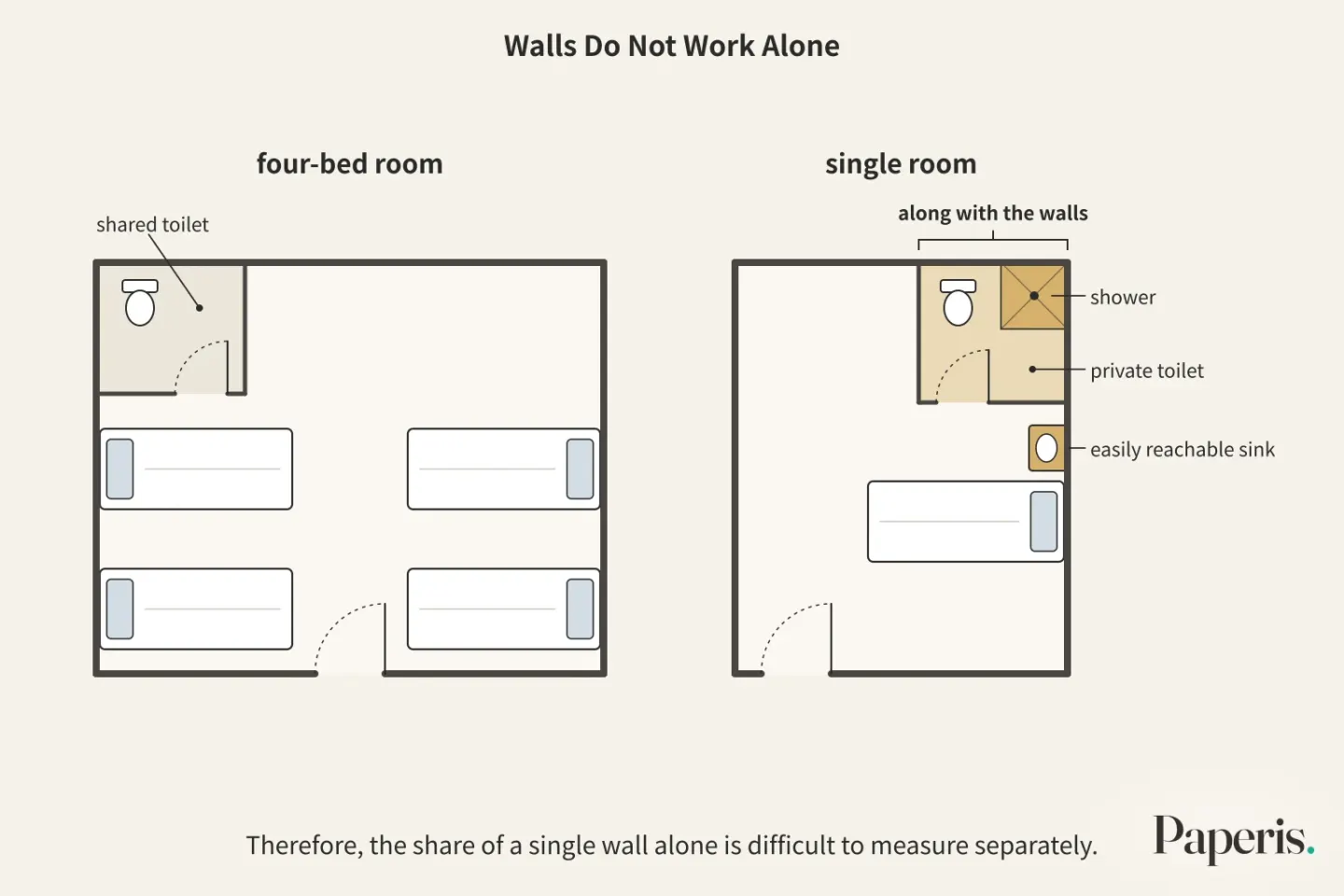
In the new patient rooms in Montreal, private toilets, showers, and easily reachable sinks came into every room along with the walls (PMID 31424489). In the earlier comparison of internal medicine wards as well, the new ward featured single rooms with individual toilets, while the old-design ward shared toilets in four-bed rooms (PMID 25371689). The 2016 analysis reviewed earlier separately summarized that three studies placing hand sanitizer close to the bed all improved hand hygiene (PMID 27957323). In the previous studies collected here, shifting to single rooms meant moving to a new building or remodeling a ward, and in two of those places, new toilets and sinks came in together, while in one hospital, an operational change that moved patients less often accompanied the shift. Therefore, the share of a single wall alone is difficult to measure separately.
In an intensive care unit where newborns were hospitalized, hand hygiene was linked to colonization regardless of room layout. In a 29-month record from this unit, which combined single rooms and open bays, methicillin-resistant Staphylococcus aureus colonization, late-onset bacterial infection, and mortality were similar between the two layouts. Good adherence to hand hygiene upon entering and leaving the room was associated with less colonization regardless of room layout, and the daily average number of hospitalized infants was associated with colonization only in single rooms (PMID 26108888). One intensive care unit introduced ten single rooms and subsequently ran a hand hygiene campaign, with methicillin-resistant Staphylococcus aureus infections decreasing at each stage. Infections from other drug-resistant bacteria managed in the open bays did not decrease to the same extent. However, a statistically clear trend appeared only when dividing the period before and after the SARS outbreak, and the authors considered that the death of a fellow medical worker from an occupational infection heavily influenced attitudes toward adhering to protocols. Concluding that both single-room isolation facilities and improved hand hygiene are important, the authors added that rule adherence depends in large part on individual commitment (DOI: 10.1186/1471-2334-10-263).
A 2015 model that calculated airflow and hand contact together showed a similar center of gravity. What most significantly divided the amount of pathogens transferred to the hands was the type of care provided, followed by the number of surfaces touched by hands. In single rooms, walls blocked airborne transmission between rooms, and hand sanitization added thereafter tended to reduce hand contamination after care, whereas in four-bed rooms, contamination tended to increase while caring for patients. The authors wrote that single rooms can significantly reduce the risk of cross-contamination from indirect transmission (PMID 25614923). Within this model, the share blocked by walls was calculated, but that share appeared layered on top of the type of care and hand sanitization.
There are also records where transmission was observed to be low while using two-bed or multi-bed rooms. In a study observing a 12-bed intensive care unit in France with only two-bed rooms between 2014 and 2015, patients in whom cross-transmission of enterobacteriaceae was identified numbered 2 out of 221 tested more than once, and there were no cases of transmission within the same two-bed room. This is an observation without a comparison group (PMID 28674848). There is also a record from a French university hospital between 2017 and 2018 during the flu season, where flu patients were placed in multi-bed rooms while selecting neighboring patients with robust immunity, using bed dividers, masks, and preventive medication for the neighboring patients together. The authors reported these as preliminary results and noted that there may have been missed infections because neighboring patients were not systematically tested (PMID 34562527).
Comparisons themselves also have pitfalls. In a 2014 study investigating an Australian public health service mixing single and multi-bed rooms over two weeks, bed occupancy never dropped below 99.4%, and the primary reason for assigning patients to single rooms was infection control. Assignment patterns varied depending on ward type and the number of empty single rooms, and assignment was a complex decision entangling available beds, patient infection status, finances, and patient and family wishes, with almost no basis guiding the decision other than infection control guidelines (PMID 27263512). If single-room patients and multi-bed patients went to those rooms for different reasons from the start, comparing records within a single hospital measures the difference in rooms and the difference in patients together. A commentary discussing methods to evaluate hospital design through clinical outcomes noted that fewer than 4% of hospitals undergo systematic evaluations of buildings after people move in (DOI: 10.1002/jhm.12987). What those evaluations look at was covered in "Paths and Use — A Newcomer's Steps, an Occupant's Word".
Beyond Infection: Sleep and Privacy, Delirium, Time Alone
Moving to outcomes outside of infection, the evidence gets thinner. The benefits of single rooms highlighted by the earlier 2007 review were moderate for patient satisfaction, noise and sleep, and privacy and dignity (PMID 17631979). According to a review summarizing literature from 2005 to 2020, single rooms have increasingly become the standard in intensive care units (PMID 34000842).
Delirium is a state where the mind suddenly becomes clouded and confused over the course of hours to days while the body is severely ill or undergoing major treatment. In a 2011 record from the intensive care unit of a cancer specialty teaching hospital—where 23 out of 31 beds were grouped into two large rooms (13 beds and 10 beds) and only 8 beds were single rooms—the rate of patients who developed delirium among 1,253 patients was 6.8% in single rooms and 15.1% in large rooms. Patient characteristics at admission did not differ between the two sides. However, there were no differences in the number of days spent without delirium or coma, the day delirium first appeared, or the pattern of delirium (PMID 25226117). Because this is a comparison looking back at past records from a single hospital, a gap remains between the finding that delirium occurred less and the reason being the wall.
There is also research that looked at mortality. In a study reviewing 3,179 adult intensive care unit patients across three Korean university hospitals from 2022 to 2023, the intensive care unit mortality rate was 8.3% in the hospital where all beds were single rooms, and 15.2% and 9.7% in the two hospitals where single and multi-bed rooms were mixed. Even after matching and adjusting for similar patients, single rooms were associated with a lower likelihood of death (adjusted odds ratio 0.54). The authors wrote that single rooms were associated with a protective effect of reducing mortality, while concluding that intensive care unit outcomes appear to be influenced by structural improvements as well as other clinical factors (PMID 40494593). Because the side where all beds were single rooms was a single hospital, this comparison captures the difference in rooms and the difference in hospitals together.
When narrowed to older adults and neurological patients, the picture becomes more cautious. A 2018 review summarizing 19 studies on these patients noted that, aside from a slight signal in infection control, it found no evidence to support single rooms in other important outcomes (DOI: 10.1080/17508975.2018.1548339).
Time alone remains a worry. The earlier Korean intensive care unit study noted as its research background the worry that single rooms could isolate patients and make it harder for staff to notice situations (PMID 40494593). The previous commentary introduced the expectation that in double rooms, a neighboring patient can call the staff, leading to a quicker response in emergencies. In that text, this is written as an expectation, and the tested results are not included together (DOI: 10.1002/jhm.12987). Patient safety outcomes were already concluded to lack evidence back at the time of the 2007 review (PMID 17631979), and the materials gathered here also contain no comparisons that fill that blank.
The Neonatal Intensive Care Unit: A Room That Welcomes Parents
A neonatal intensive care unit is a hospital ward where premature or sick newborns are watched over and treated day and night. For a long time, this ward had an open-bay layout where many cribs were lined up in a single large room. According to an author who took part in planning a new neonatal ward at an American children's hospital in 2005, even as other hospital wards were shifting to single rooms, the neonatal ward remained untouched by that trend, and the first ward built with separate rooms for individual newborns did not open until 1997 (DOI: 10.4037/ccn2005.25.5.59).
A single-family room is a hospital room in the neonatal intensive care unit where one baby and their family share a single space, allowing parents to stay by the baby's side day and night. There is an international survey that looked at neonatal wards using a proximity-based criterion of whether they had facilities allowing parents to stay in the baby's room 24 hours a day. Among 331 neonatal wards across 11 high-income countries, 13.3% had such facilities. When the same study followed up on the data of 4,662 babies born before 29 weeks of pregnancy in 2015, babies in wards with such facilities had a lower likelihood of death or major complications (adjusted odds ratio 0.76) and a hospital stay that was 3.4 days shorter on average. The authors reported these findings as being associated with the ward facilities (PMID 32525041).
A 2019 review gathering infant outcomes combined 13 cohorts encompassing 4,793 participants, including both randomized trials and non-randomized studies. In single-family rooms, sepsis was about 0.63 times lower, and the rate of exclusive breastfeeding at discharge was about 1.31 times higher. However, there was no difference in cognitive development measured at a corrected age (age calculated based on the due date) of 18 to 24 months, nor were there differences in outcomes such as length of hospital stay, growth, or mortality. The authors concluded that single-family rooms should be considered for the hospitalization of premature infants due to lower rates of sepsis and higher rates of breastfeeding (PMID 30630745).
A 2020 review gathering parent outcomes combined 11 cohorts, and except for one paper, all had serious or critical risk of bias. In single-family rooms, parents stayed by the baby's side longer, participated more in caregiving, spent more time holding the baby skin-to-skin, and experienced lower stress at discharge. There were no differences in anxiety, bonding with the baby, or self-efficacy in caregiving; depression was as high as 29%, but there was no difference between the two layouts (PMID 32548575).
A 2019 survey study comparing the two wards demonstrated the difference in terms of time. When following 132 parents of 77 babies born at 28 to 32 weeks of pregnancy, the time parents spent by the baby's side was 21 hours a day in the single-family room ward and 7 hours in the open-bay ward (PMID 31689307). Mothers in single-family rooms had lower depression scores, with 14% exceeding the high-risk depression threshold compared to 52% in open-bay wards. Stress during hospitalization was lower for both fathers and mothers, but there were no differences in anxiety, stress, or attachment scores after discharge. On depression, this study and the preceding 2020 review yielded different answers.
Studies tracking how rooms affected babies found the pathways through which the effects occurred. In a quasi-experimental study from 2008 to 2012 comparing 151 babies born weighing less than 1,500g in an open-bay ward with 252 babies after moving to a single-family room, babies in single-family rooms had a higher weight at discharge, received fewer medical procedures, had less sepsis, showed better attention, and experienced less pain. The differences in weight and attention were explained by an increase in developmental care, while the differences in the number of procedures, stress, and pain were explained by an increased participation of mothers (PMID 25246623). In this quasi-experimental study, several of the differences observed in single-family room babies were explained by an increase in human-provided care inside that room. An 18-month follow-up from 2016 comparing babies born before 30 weeks of pregnancy—123 in single-family rooms and 93 in open-bay wards—found that cognitive and language scores were higher in babies whose mothers participated heavily in both wards, and heavily participating mothers were more frequent on the single-family room side (PMID 27470693). In another comparison of babies born weighing 1,250g or less, contrasting 394 from the open-bay era (2007–2009) with 297 from the single-family room era (2010–2011), single-family room babies scored 2.55 points higher in cognition and 3.70 points higher in language on developmental assessments at 18 to 24 months, received more breast milk, and it was additionally reported that these benefits could vary depending on the family's insurance type (PMID 28238479).
Still Debated: Sensory Stimulation and Alone Time
There is a study that measured the sound across an entire neonatal intensive care unit. Published in 2026, this study attached recorders to 25 babies born before 33 weeks of pregnancy in a single ward featuring both single-family rooms and semi-open rooms, recording 128 times, and found that 63.2% of the combined recording time of both rooms was quiet, 14.5% was electronic sounds, and 3.9% was meaningful speech. Along with the room type, what they looked at was the trend that as the babies grew and moved from single-family rooms to semi-open rooms, speech increased and noise decreased, and in this study, growing older and moving rooms happened together. There was also a trend that babies whose parents stayed longer heard more speech. The authors concluded that while admitted to the neonatal intensive care unit, babies hear little meaningful sound (PMID 42129369). How room sound changes according to walls and materials was covered in "Material and Texture — A Wall the Fingertips Know, a Room That Returns a Clap".
Worries are also noted in reviews. A 2025 review summarizing 30 studies on single-family rooms in neonatal and pediatric intensive care units noted that while organizing benefits in neurodevelopment, parental involvement, and staff experience, concerns were raised that under-stimulation could affect long-term language and motor development. Some nurses reported increased emotional burden and experiencing isolation from working apart from colleagues. The authors concluded that staff support and strategies to enrich the baby's environment must go hand in hand, and stated that there was only one pediatric intensive care unit study (PMID 41136975). This worry is noted as a concern. In the comparisons seen earlier, the actually measured scores showed no difference in cognitive scores in an analysis combining multiple studies (PMID 30630745), and in a single hospital's period comparison, language and cognitive scores were higher on the single-family room side (PMID 28238479). Both were values measured at 18 to 24 months, so the longer-term development spoken of by the concern is still outside these comparisons. Another review covering 44 studies from 2011 to 2021 also found unexpected results alongside the positive outcomes of single-family rooms, and noted that while those results do not erase the positive outcomes, one must know and prepare for them in advance (PMID 35939818). In a 2024 study that conducted surveys and interviews in a ward that transitioned from an open ward to single-family rooms, families reported high safety, privacy, and satisfaction while also desiring more opportunities to socialize with other parents (PMID 39325952).
There are also results where benefits were not well seen. A study comparing 9,995 neonatal intensive care unit admissions for 5 years before and after a move at a public hospital with many low-income families showed almost no difference when accounting for trends over time, and babies born at full term had a longer length of stay and more sepsis after the move (PMID 31911646). In a study from 2015 to 2019 comparing babies born before 32 weeks of pregnancy into 356 private-room ward babies and 343 old open-ward babies, complications and deaths did not decrease, and only one problem—where a blood vessel near the heart that should close after birth remained open and caused symptoms—was noted (PMID 35444004).
Randomized controlled trials were small. In a trial randomly dividing 85 babies born before 31 weeks of pregnancy or under 1,500g between 2018 and 2019 in a single ward into single-family rooms and an open ward, death or neurodevelopmental impairment measured at 36 months (corrected age) was 40.5% and 47.4%, showing no difference. Death seen as a secondary outcome was 1 out of 41 babies in the single-family rooms and 8 out of 42 babies in the open ward (PMID 42864367). In an 85-participant trial, this was a difference that came out as a secondary outcome rather than the primary outcome, and the previous 2019 analysis found no difference in death even when combining multiple studies. In a hospital's records comparing the open-ward era (2010–2014) and the private-family-room era (2015–2019), severe neurodevelopmental impairment and pre-discharge death were lower for single-family room babies (PMID 41073768), but between the two periods, aside from the rooms, there was a span of 5 years.
Those supporting single-family rooms also did not write that the rooms alone are enough. An editorial comment from 2015 summarized that single-family rooms did not increase negative outcomes, but wrote that for long-term development, programs actively supporting developmental care and parental involvement must go together (PMID 26485558). A 2024 narrative review covering language development in premature infants also listed increasing parent-baby interaction in single-family rooms as one of the strategies that can help language development (PMID 39533738).

Illustration: Paperis
So What Do We Know
If you line up the records from the neonatal unit, they look like this. In one study comparing the two wards, parents in the single-family room ward spent an average of 21 hours a day in the baby's room (PMID 31689307). When multiple studies are combined, babies in single-family rooms had less sepsis and a higher rate of being fed only breast milk at discharge, but there was no difference in long-term development or mortality (PMID 30630745). In a 2026 recording study of another ward that housed both single-family rooms and semi-open rooms, most of the recorded time combined in both rooms consisted of silence and electronic sounds, and while speech increased as babies moved from single-family rooms to semi-open rooms, the babies also grew older during that time (PMID 42129369).
In adult wards, the results were uneven as well. In Montreal, colonization by several resistant bacteria decreased after moving to a new single-room hospital, but Clostridioides difficile infection stayed the same (PMID 31424489). In the new single-room building of Erasmus University Medical Center, patient transfers decreased, but the new acquisition of enterobacterales stayed the same (DOI: 10.1186/s13756-022-01118-7). During COVID-19, room occupancy from a Korean hospital record (PMID 39215349) and the number of single rooms in English hospitals (PMID 37853126) were associated in the same direction with in-hospital transmission.
Most of these results came from comparisons that weighed before and after the move or retraced the records of a single hospital. Among the rare randomized trials, one found that when contact precautions were used together for adult patients carrying enterobacterales producing enzymes that break down antibiotics, multi-bed rooms were no worse than single rooms by more than a pre-specified margin in transferring to patients in the same ward (PMID 31451419). Another trial dividing newborns had a scale of 85 participants, showing mortality differences only as a secondary outcome (PMID 42864367). In one public health service in Australia, room assignments were determined by circumstances such as infection status, empty beds, and family preferences (PMID 27263512), and record comparisons can be mixed with such differences.
The shape of the room changes the way care is given. However, in the studies gathered here, hand hygiene in one neonatal ward was linked to colonization regardless of room layout (PMID 26108888), toilet cleaning together with distributing it to single rooms reduced the patient count in a sensitivity analysis of one model (DOI: 10.1016/j.jhin.2026.06.007), and maternal participation was the pathway through which differences arose for babies in single-family rooms in one quasi-experimental study (PMID 25246623). On the side of single rooms, evidence has accumulated showing less transmission of some bacteria, parents staying by the bedside longer, and fewer patient transfers. Studies that separate and measure the room and the care inside it are rare in the evidence gathered in this article, and what time spent alone changes has also been less measured so far.
Source Papers
- "Time-Series Analysis of Health Care-Associated Infections in A New Hospital With All Private Rooms." (2019) — PMID 31424489 — Montreal before-and-after comparison of moving to all single rooms: vancomycin-resistant Enterococcus acquisition and infection and methicillin-resistant Staphylococcus aureus carriage decreased, while Clostridioides difficile and Staphylococcus aureus infections showed no decrease.
- "Advantages and Disadvantages of Single-Versus Multiple-Occupancy Rooms in Acute Care Environments: A Review and Analysis of the Literature" (2005) — DOI: 10.1177/0013916504272658 — Single rooms became the industry standard in the U.S. based on assumptions such as infection reduction, and the review concluded that single rooms reduce infection risk and benefit treatment.
- "A review of the research literature on evidence-based healthcare design." (2008) — PMID 21161908 — A review of evidence-based design research, listing single rooms as a design element supported by evidence.
- "Do patients in hospitals benefit from single rooms? A literature review." (2007) — PMID 17631979 — 25 papers: moderate effects on satisfaction, noise, sleep, and privacy; mixed results for infection; no evidence for recovery or safety; a lack of robust studies.
- "The effect of 100% single-occupancy rooms on acquisition of extended-spectrum beta-lactamase-producing Enterobacterales and intra-hospital patient transfers: a prospective before-and-after study" (2022) — DOI: 10.1186/s13756-022-01118-7 — No difference in intestinal enterobacteriaceae acquisition after moving to single rooms (3.1% versus 3.5%), with reduced intra-hospital patient transfers, and transfers linked to acquisition.
- "Contact precautions in single-bed or multiple-bed rooms for patients with extended-spectrum β-lactamase-producing Enterobacteriaceae in Dutch hospitals: a cluster-randomised, crossover, non-inferiority study." (2019) — PMID 31451419 — A cluster-randomised crossover trial across 16 hospitals showing that a multi-bed room strategy under contact precautions is not inferior to single rooms (4% versus 7%).
- "Examining the association between hospital-onset Clostridium difficile infection and multiple-bed room exposure: a case-control study." (2018) — PMID 30060776 — No association between multi-bed room assignment and hospital-onset Clostridioides difficile colitis.
- "Hospital ward design and prevention of hospital-acquired infections: A prospective clinical trial." (2014) — PMID 25371689 — No difference in hospital-acquired infections or carriage between a new single-room-focused ward and an old ward, indicating a need for further research.
- "Use of single-bed rooms may decrease the incidence of hospital-acquired infections in geriatric patients: A retrospective cohort study in Central Denmark region." (2021) — PMID 33586483 — 446 geriatric ward patients, hospital infections 30% in multi-bed rooms versus 20% in single rooms, hypothesis-generating stage.
- "Single rooms may help to prevent nosocomial bloodstream infection and cross-transmission of methicillin-resistant Staphylococcus aureus in intensive care units." (2007) — PMID 17347828 — One intensive care unit, multi-bed room acquisition of resistant staphylococci 4.1 versus 1.3 per 1,000 patient-days in single rooms, under non-outbreak hospital conditions.
- "Relationship between hospital ward design and healthcare-associated infection rates: a systematic review and meta-analysis." (2016) — PMID 27957323 — 6 of 9 single-room studies showed benefit, with a pooled risk ratio of 0.55, and alcohol hand rub near beds improved hand hygiene.
- "Relationship between hospital ward design and healthcare associated infection rates: what does the evidence really tell us? Comment on Stiller et al. 2016." (2017) — PMID 28670451 — The conclusions of the above analysis are not supported by evidence: predominantly before-and-after comparisons without control groups, lack of bias assessment, and analytical errors.
- "Risk of nosocomial coronavirus disease 2019: comparison between single- and multiple-occupancy rooms." (2024) — PMID 39215349 — 2022 admissions at a tertiary hospital, in-hospital COVID-19 3.05 in single rooms to 38.64 per 10,000 patient-days in 6-bed rooms, increasing with room occupancy.
- "The burden and dynamics of hospital-acquired SARS-CoV-2 in England." (2023) — PMID 37853126 — 1% to 2% of hospital admissions in England were hospital-acquired infections, with increased transmission in hospitals with fewer single rooms and smaller space volume per bed.
- "Modelling the joint effects of single occupancy and N95 respirators on COVID-19 outbreaks in hospital wards" (2025) — DOI: 10.1016/j.jhin.2025.06.014 — Model: COVID-19 outbreak size 14.1 in single-room wards versus 22.8 in 2-bed rooms, with nurses at higher risk of infection than patients.
- "Simulating interventions to prevent gastro-intestinal transmission of Clostridioides difficile and antimicrobial-resistant bacteria in healthcare settings: a model calibration study" (2026) — DOI: 10.1016/j.jhin.2026.06.007 — Model: Toilet cleaning frequency has the largest effect, while single-room isolation and antibiotic stewardship also reduce transmission.
- "Impact of neonatal intensive care bed configuration on rates of late-onset bacterial sepsis and methicillin-resistant Staphylococcus aureus colonization." (2015) — PMID 26108888 — Neonatal intensive care unit, room layout unrelated to carriage, sepsis, or mortality, with hand hygiene compliance associated with reduced carriage.
- "Sequential introduction of single room isolation and hand hygiene campaign in the control of methicillin-resistant Staphylococcus aureus in intensive care unit" (2010) — DOI: 10.1186/1471-2334-10-263 — Introduction of single rooms followed by a hand hygiene campaign, stepwise reduction, clear trends only around SARS, and compliance dependent on personal commitment.
- "Modeling environmental contamination in hospital single- and four-bed rooms." (2015) — PMID 25614923 — Model: Hand contamination is primarily driven by the type of care, with single rooms decreasing hand contamination by blocking airborne transmission and 4-bed rooms increasing it.
- "Epidemiology of extended-spectrum beta-lactamase-producing Enterobacteriaceae in an intensive care unit with no single rooms." (2017) — PMID 28674848 — An intensive care unit with only 2-bed rooms, confirmed cross-transmission in 2 of 221 patients, with no transmission within the same room.
- "Is it possible to hospitalize patients in multiple-bed room without increasing the risk of hospital-acquired influenza? Description of a pragmatic preventive strategy in a French university hospital." (2022) — PMID 34562527 — Preliminary results of a multi-bed room influenza prevention strategy, with potential detection bias.
- "Single-room usage patterns and allocation decision-making in an Australian public hospital: a sequential exploratory study." (2016) — PMID 27263512 — Bed occupancy rate above 99.4%, infection control as the primary reason for single room assignment, with little evidence outside guidelines.
- "Strategies to evaluate the quality of hospital design with clinical data" (2022) — DOI: 10.1002/jhm.12987 — Commentary: fewer than 4% of hospitals undergo formal post-occupancy evaluation, and multi-bed room features like neighboring patient alerts meet expected levels.
- "Intensive Care Unit Built Environments: A Comprehensive Literature Review (2005-2020)." (2021) — PMID 34000842 — Single-room intensive care units are increasingly becoming the standard.
- "ICU architectural design affects the delirium prevalence: a comparison between single-bed and multibed rooms*." (2014) — PMID 25226117 — 1,253 patients in an intensive care unit, delirium 6.8% in single rooms versus 15.1% in large rooms, with no difference in delirium-free days.
- "Comparing single-patient and multi-patient room intensive care units: a multicenter cohort study on architectural differences and clinical significance in South Korea." (2025) — PMID 40494593 — 3,179 patients across 3 university hospitals, mortality-adjusted odds ratio 0.54 for single-room intensive care units, with other clinical factors also having an effect.
- "Bringing the single versus multi-patient room debate to vulnerable patient populations: a systematic review of the impact of room types on hospitalized older people and people with neurological disorders" (2018) — DOI: 10.1080/17508975.2018.1548339 — Older adults and neurological patients, no evidence for single rooms beyond infection signals.
- "Challenging Designs of Neonatal Intensive Care Units" (2005) — DOI: 10.4037/ccn2005.25.5.59 — Article by a children's hospital neonatal nursing director: neonatal wards remained multi-bed rooms, with the first individual room ward in 1997.
- "Family Rooms in Neonatal Intensive Care Units and Neonatal Outcomes: An International Survey and Linked Cohort Study." (2020) — PMID 32525041 — Only 13.3% of 331 wards had 24-hour parent stay rooms, mortality and major complication adjusted odds ratio 0.76, 3.4-day shorter hospital stay (associated).
- "Hospitalising preterm infants in single family rooms versus open bay units: a systematic review and meta-analysis." (2019) — PMID 30630745 — 4,793 participants across 13 cohorts, sepsis 0.63 times, human milk feeding alone 1.31 times, no difference in long-term development or mortality.
- "Hospitalising preterm infants in single family rooms versus open bay units: A systematic review and meta-analysis of impact on parents." (2020) — PMID 32548575 — Serious risk of bias in all but one study, increased parental stay, participation, and skin-to-skin contact, reduced discharge stress, no difference in depression.
- "Parent psychological wellbeing in a single-family room versus an open bay neonatal intensive care unit." (2019) — PMID 31689307 — Parental stay 21 hours versus 7 hours, high maternal depression risk 14% versus 52%, no difference in post-discharge anxiety or stress.
- "Single-family room care and neurobehavioral and medical outcomes in preterm infants." (2014) — PMID 25246623 — Quasi-experimental 151 versus 252 participants, improved outcomes for babies in single-family rooms, mediated by developmental support and maternal participation.
- "18-Month Follow-Up of Infants Cared for in a Single-Family Room Neonatal Intensive Care Unit." (2016) — PMID 27470693 — Higher 18-month cognitive and language scores in babies with high maternal participation, especially in single-family rooms.
- "Differential Effects of the Single-Family Room Neonatal Intensive Care Unit on 18- to 24-Month Bayley Scores of Preterm Infants." (2017) — PMID 28238479 — Single-family room cognition +2.55 and language +3.70 points, increased human milk, differences according to insurance type.
- "Evolution of the auditory environment of very preterm infants before term-equivalent age in relation to room type and parental presence." (2026) — PMID 42129369 — 25 recordings, 63.2% silence and 3.9% meaningful speech, increased speech upon moving to half-open rooms, and a trend toward positive correlation with parental presence.
- "The effects of the introduction of the single-family room in neonatal and paediatric intensive care on the outcomes of paediatric patients, families, staff, and organizations: a mixed method systematic review." (2025) — PMID 41136975 — 30 papers, benefits alongside sensory deprivation concerns and nurse isolation, 1 pediatric intensive care unit study.
- "Unintended Consequences of the Neonatal Intensive Care Unit Environment: Integrative Review of Single-Family Room Unit Design." (2023) — PMID 35939818 — 44 papers, both positive and negative results, with negative results not negating the positive ones.
- "Designed for Satisfaction: The Impact of Single-Family Room Neonatal Intensive Care Units on Family Presence and Satisfaction." (2024) — PMID 39325952 — Increased family sense of security, privacy, and satisfaction, with a demand for opportunities for interaction among parents.
- "Single-family room neonatal intensive care unit design: do patient outcomes actually change?" (2020) — PMID 31911646 — 9,995 cases, little difference when accounting for trends, increased length of stay and sepsis in term infants.
- "Comparison of neonatal morbidity and mortality between single-room and open-bay care: a retrospective cohort study." (2022) — PMID 35444004 — 356 versus 343 participants, no reduction in complications or mortality, reduction only in symptomatic patent ductus arteriosus.
- "Long-term outcomes of preterm infants admitted to single-family rooms versus an open-bay neonatal intensive care unit: A randomized controlled trial." (2026) — PMID 42864367 — Randomized trial of 85 participants, no difference in 36-month mortality or neurodevelopmental impairment, secondary outcome mortality 1 of 41 versus 8 of 42.
- "Association of NICU design on neurodevelopmental outcomes in preterm neonates born at less than 29 weeks' gestation: a retrospective observational study." (2025) — PMID 41073768 — Comparison between 2010–2014 and 2015–2019 periods, adjusted odds ratio 0.51 for severe neurodevelopmental impairment in single-family rooms.
- "Mounting evidence favoring single-family room neonatal intensive care." (2015) — PMID 26485558 — Editorial commentary: no increase in negative results, developmental care and parental participation programs must go hand in hand.
- "Strategies to support language development in neonatal intensive care unit: a narrative review." (2024) — PMID 39533738 — Narrative review: increased parent-infant interaction in single-family rooms as a strategy to support language development.
Sources (45)
- Time-Series Analysis of Health Care-Associated Infections in a New Hospital With All Private RoomsPMID 31424489
- Advantages and Disadvantages of Single-Versus Multiple-Occupancy Rooms in Acute Care Environments: A Review and Analysis of the LiteratureDOI 10.1177/0013916504272658
- A review of the research literature on evidence-based healthcare designPMID 21161908
- Do patients in hospitals benefit from single rooms? A literature reviewPMID 17631979
- The effect of 100% single-occupancy rooms on acquisition of extended-spectrum beta-lactamase-producing Enterobacterales and intra-hospital patient transfers: a prospective before-and-after studyDOI 10.1186/s13756-022-01118-7
- Contact precautions in single-bed or multiple-bed rooms for patients with extended-spectrum β-lactamase-producing Enterobacteriaceae in Dutch hospitals: a cluster-randomised, crossover, non-inferioritPMID 31451419
- Examining the association between hospital-onset Clostridium difficile infection and multiple-bed room exposure: a case-control studyPMID 30060776
- Hospital ward design and prevention of hospital-acquired infections: A prospective clinical trialPMID 25371689
- Use of single-bed rooms may decrease the incidence of hospital-acquired infections in geriatric patients: A retrospective cohort study in Central Denmark regionPMID 33586483
- Single rooms may help to prevent nosocomial bloodstream infection and cross-transmission of methicillin-resistant Staphylococcus aureus in intensive care unitsPMID 17347828
- Relationship between hospital ward design and healthcare-associated infection rates: a systematic review and meta-analysisPMID 27957323
- Relationship between hospital ward design and healthcare associated infection rates: what does the evidence really tell us? Comment on Stiller et al. 2016PMID 28670451
- Risk of nosocomial coronavirus disease 2019: comparison between single- and multiple-occupancy roomsPMID 39215349
- The burden and dynamics of hospital-acquired SARS-CoV-2 in EnglandPMID 37853126
- Modelling the joint effects of single occupancy and N95 respirators on COVID-19 outbreaks in hospital wardsDOI 10.1016/j.jhin.2025.06.014
- Simulating interventions to prevent gastro-intestinal transmission of Clostridioides difficile and antimicrobial-resistant bacteria in healthcare settings: a model calibration studyDOI 10.1016/j.jhin.2026.06.007
- Impact of neonatal intensive care bed configuration on rates of late-onset bacterial sepsis and methicillin-resistant Staphylococcus aureus colonizationPMID 26108888
- Sequential introduction of single room isolation and hand hygiene campaign in the control of methicillin-resistant Staphylococcus aureus in intensive care unitDOI 10.1186/1471-2334-10-263
- Modeling environmental contamination in hospital single- and four-bed roomsPMID 25614923
- Epidemiology of extended-spectrum beta-lactamase-producing Enterobacteriaceae in an intensive care unit with no single roomsPMID 28674848
- Is it possible to hospitalize patients in multiple-bed room without increasing the risk of hospital-acquired influenza? Description of a pragmatic preventive strategy in a French university hospitalPMID 34562527
- Single-room usage patterns and allocation decision-making in an Australian public hospital: a sequential exploratory studyPMID 27263512
- Strategies to evaluate the quality of hospital design with clinical dataDOI 10.1002/jhm.12987
- Intensive Care Unit Built Environments: A Comprehensive Literature Review (2005-2020)PMID 34000842
- ICU architectural design affects the delirium prevalence: a comparison between single-bed and multibed roomsPMID 25226117
- Comparing single-patient and multi-patient room intensive care units: a multicenter cohort study on architectural differences and clinical significance in South KoreaPMID 40494593
- Bringing the single versus multi-patient room debate to vulnerable patient populations: a systematic review of the impact of room types on hospitalized older people and people with neurological disordDOI 10.1080/17508975.2018.1548339
- Challenging Designs of Neonatal Intensive Care UnitsDOI 10.4037/ccn2005.25.5.59
- Family Rooms in Neonatal Intensive Care Units and Neonatal Outcomes: An International Survey and Linked Cohort StudyPMID 32525041
- Hospitalising preterm infants in single family rooms versus open bay units: a systematic review and meta-analysisPMID 30630745
- Hospitalising preterm infants in single family rooms versus open bay units: A systematic review and meta-analysis of impact on parentsPMID 32548575
- Parent psychological wellbeing in a single-family room versus an open bay neonatal intensive care unitPMID 31689307
- Single-family room care and neurobehavioral and medical outcomes in preterm infantsPMID 25246623
- 18-Month Follow-Up of Infants Cared for in a Single-Family Room Neonatal Intensive Care UnitPMID 27470693
- Differential Effects of the Single-Family Room Neonatal Intensive Care Unit on 18- to 24-Month Bayley Scores of Preterm InfantsPMID 28238479
- Evolution of the auditory environment of very preterm infants before term-equivalent age in relation to room type and parental presencePMID 42129369
- The effects of the introduction of the single-family room in neonatal and paediatric intensive care on the outcomes of paediatric patients, families, staff, and organizations: a mixed method systematiPMID 41136975
- Unintended Consequences of the Neonatal Intensive Care Unit Environment: Integrative Review of Single-Family Room Unit DesignPMID 35939818
- Designed for Satisfaction: The Impact of Single-Family Room Neonatal Intensive Care Units on Family Presence and SatisfactionPMID 39325952
- Single-family room neonatal intensive care unit design: do patient outcomes actually change?PMID 31911646
- Comparison of neonatal morbidity and mortality between single-room and open-bay care: a retrospective cohort studyPMID 35444004
- Long-term outcomes of preterm infants admitted to single-family rooms versus an open-bay neonatal intensive care unit: A randomized controlled trialPMID 42864367
- Association of NICU design on neurodevelopmental outcomes in preterm neonates born at less than 29 weeks' gestation: a retrospective observational studyPMID 41073768
- Mounting evidence favoring single-family room neonatal intensive carePMID 26485558
- Strategies to support language development in neonatal intensive care unit: a narrative reviewPMID 39533738